

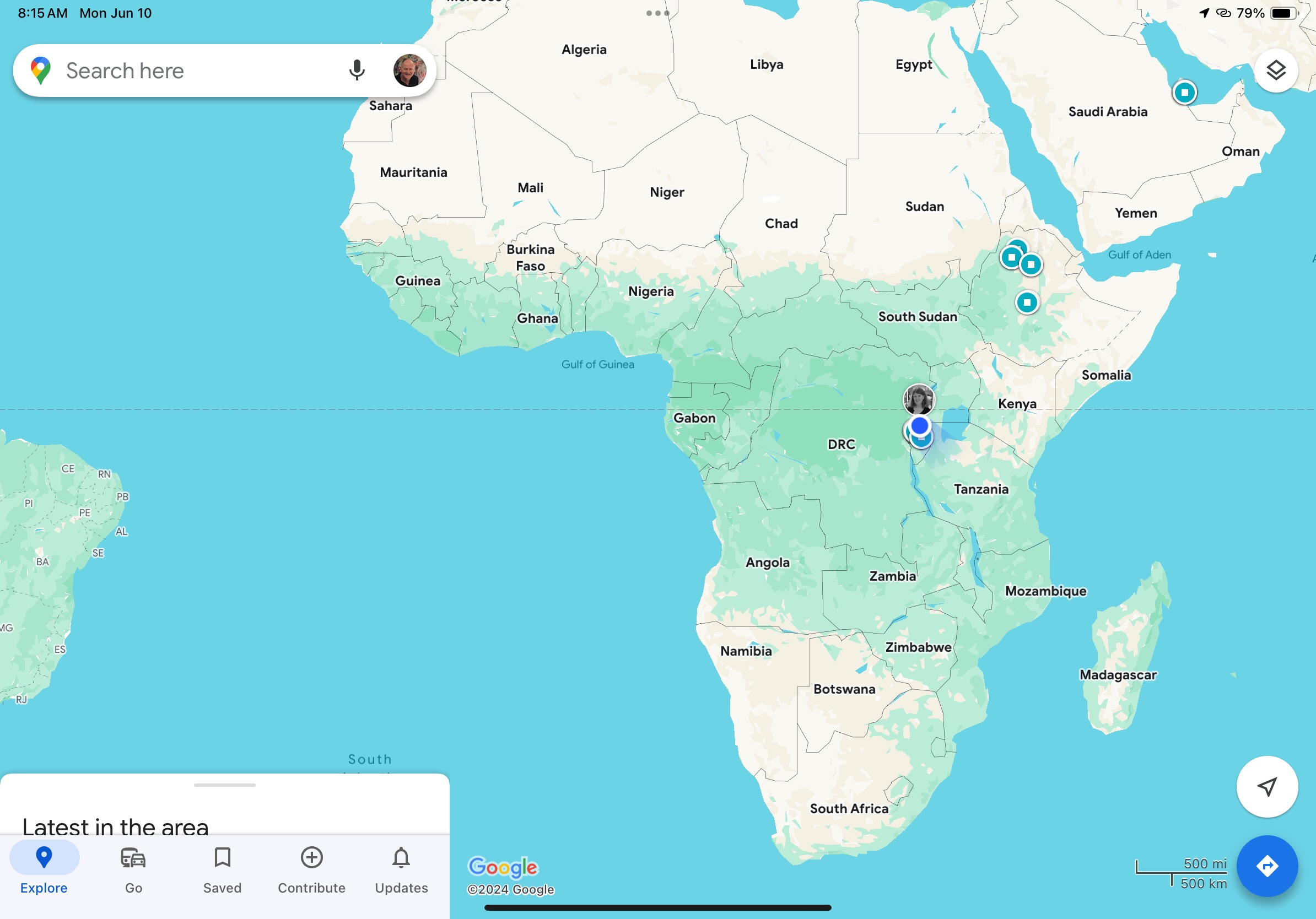
What brought us to Africa was a visit to a longtime friend. Nine years ago, we visited him while he was posted in Ethiopia. That was an incredible 2 weeks, and now he is in Rwanda. Time for another visit!
Already in northern Rwanda to see gorillas, Jim thought it would be cool to cross the border into Uganda…and he was right! The Ugandan border was just a 2 hour drive from where we were staying. The border crossing itself was worth the experience!
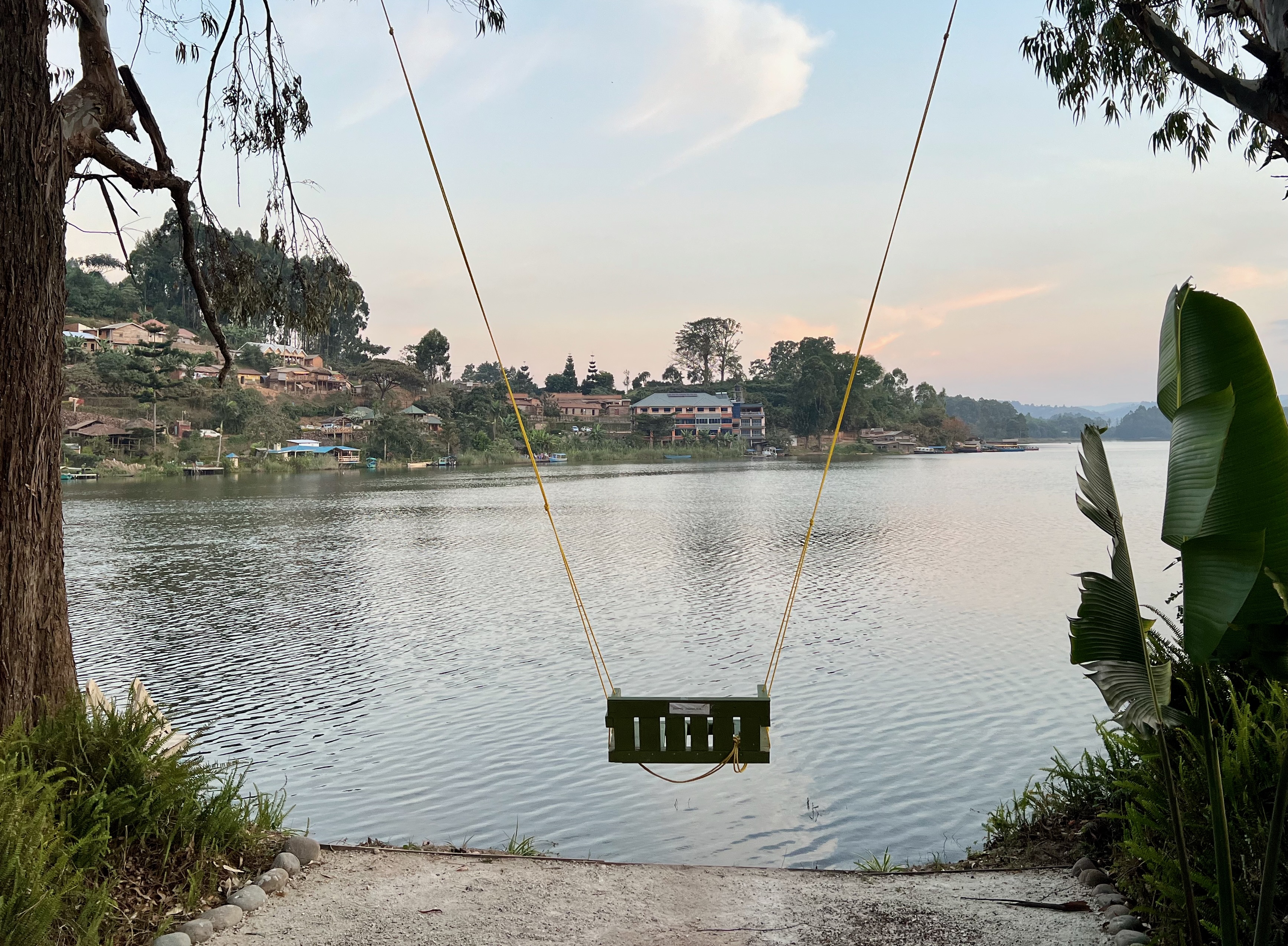
Our destination was a lakeside resort on Uganda’s Lake Bunyonyi. Ahead was 3 days of relaxing and enjoying the resort.


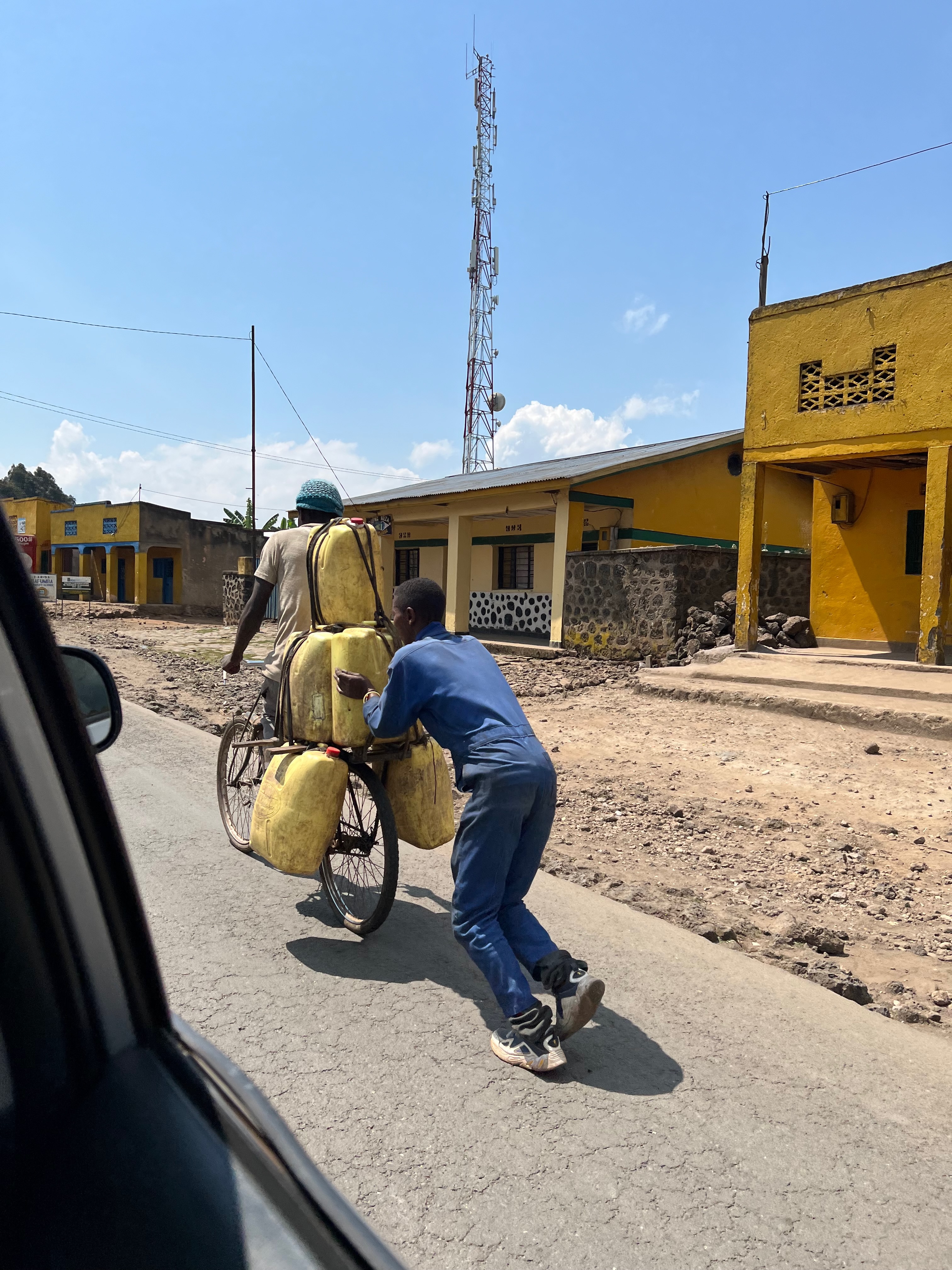
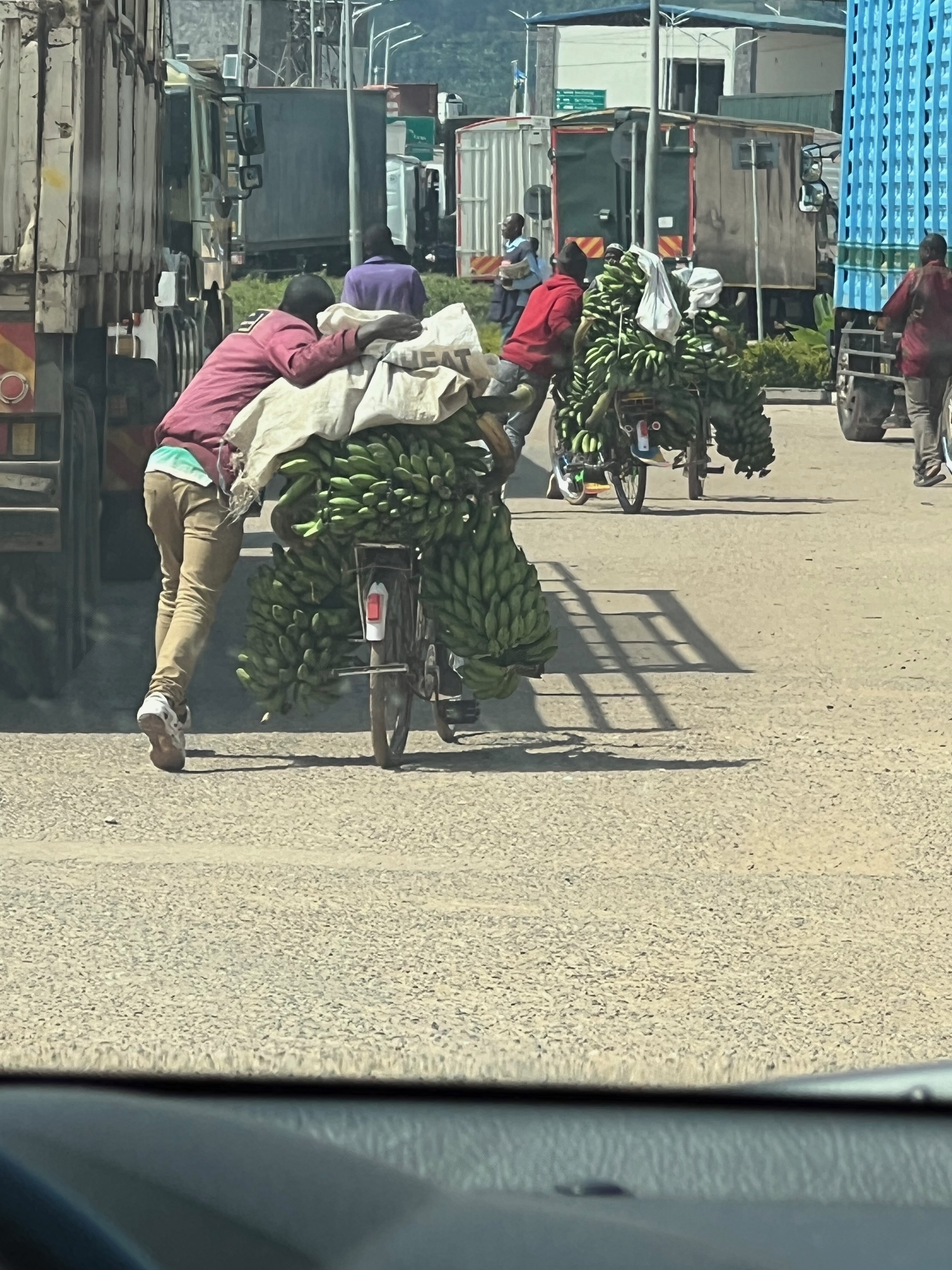
Traffic on the highway was again diverse. People traveled by foot, bicycle, motorbike, car, truck, bus, and occasionally livestock. As we got closer to the border, we noticed a lot of heavy loads. A massive truck, would be followed by a bicycle laden with bananas. They were headed to the border, laden with exports.

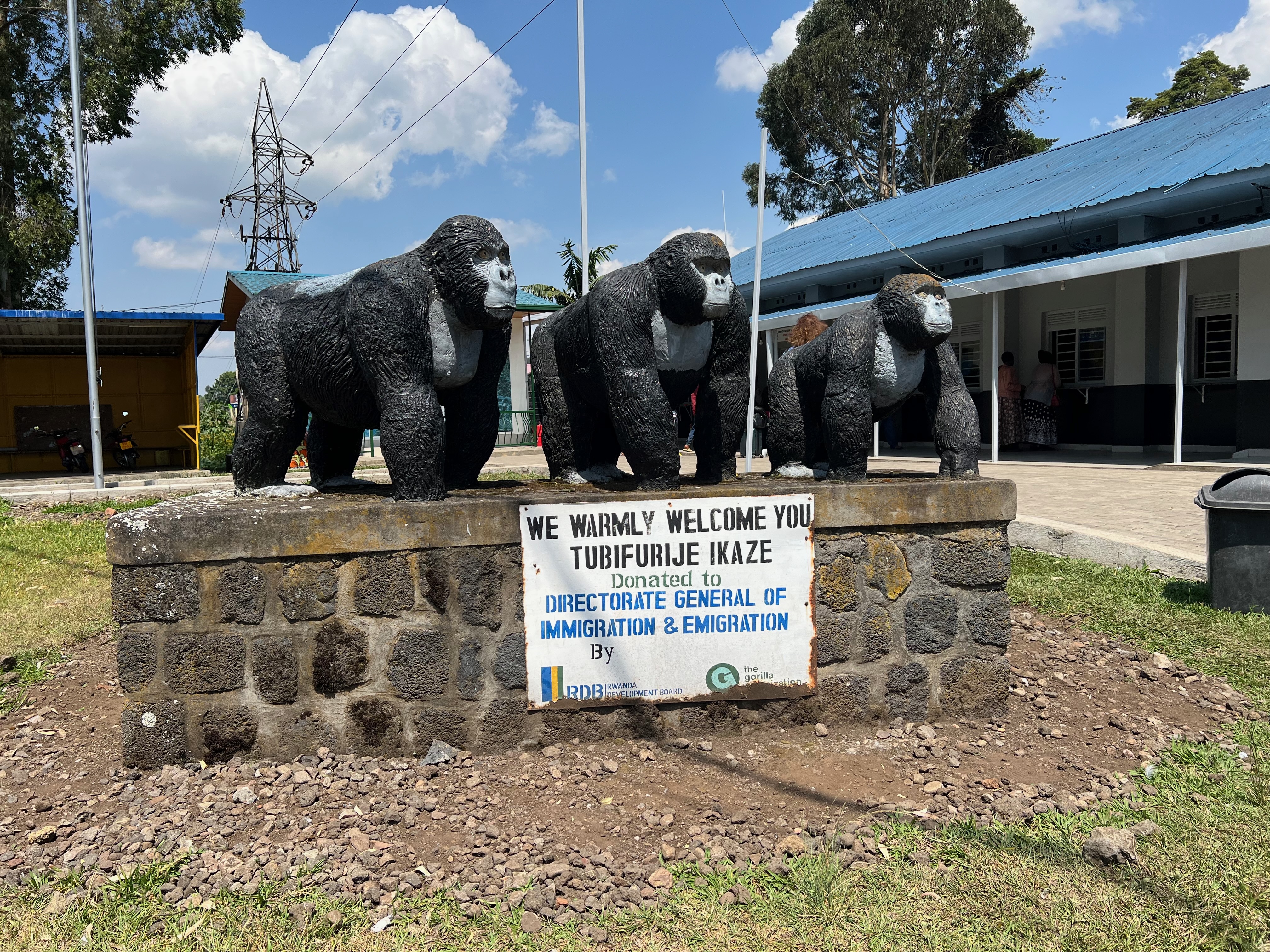
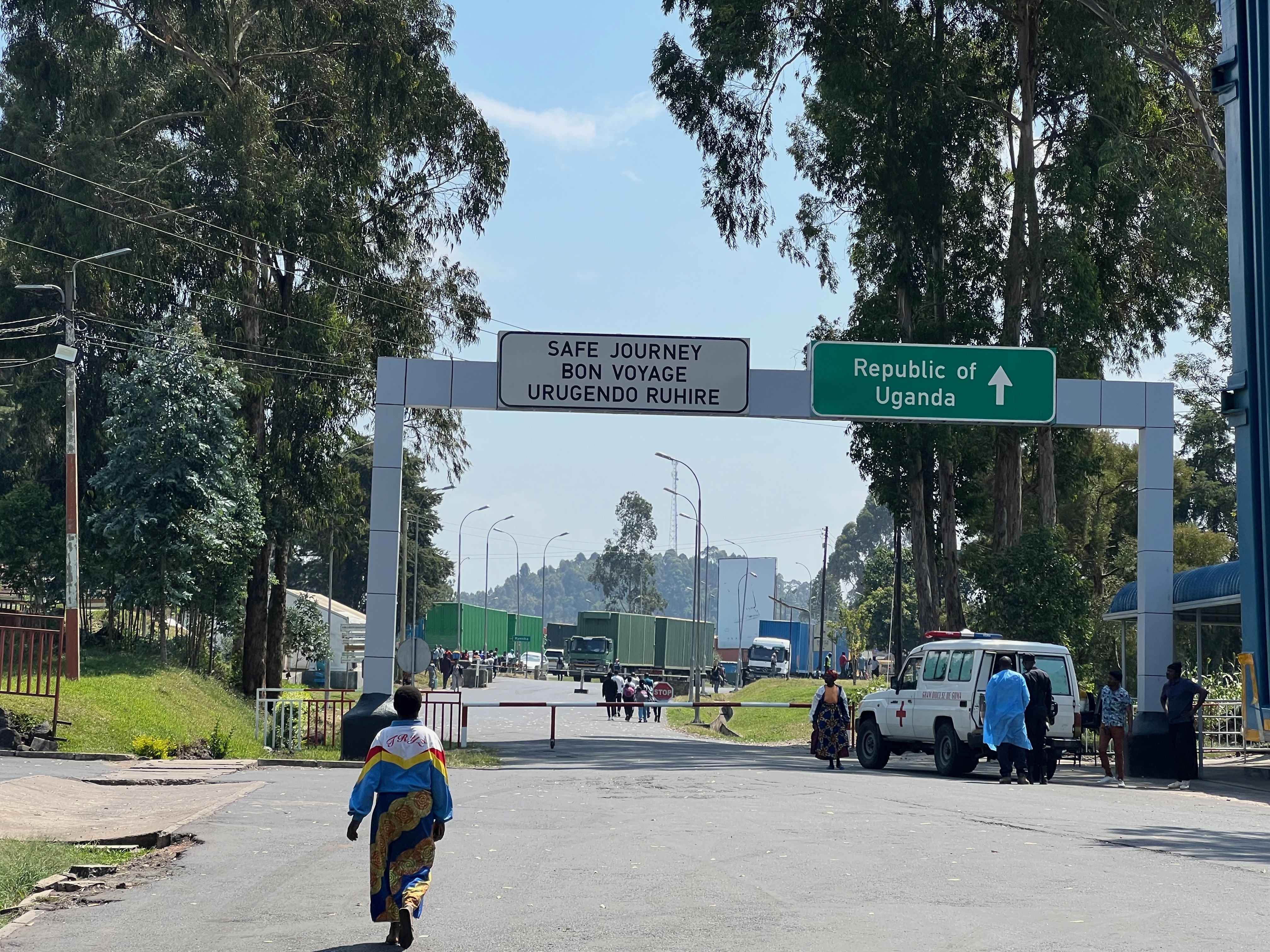
The border town is called Kyanika (sometimes spelled Cyanika) pronounced CHAN-ee-ka. It is a small, rural border crossing and we were the only tourists. The process began with the car. Jim took the car to one area where it was inspected down to its very nuts and bolts. The rest of us got in a long, slow-moving line. This was the line to exit Rwanda. Then came another line to enter Uganda.


The whole experience was like a movie. It somehow felt chaotic and well-organized at the same time. This, I have come to learn, is the essence of Africa. One hour later, we were back in the car headed into Uganda.
To the government of Uganda, if I could make one small suggestion, it is this. Hang a sign that says, “Drive on the left”! Fortunately, the roads out of town were small, and slow. A quick google revealed why cars seemed to be headed right for us!
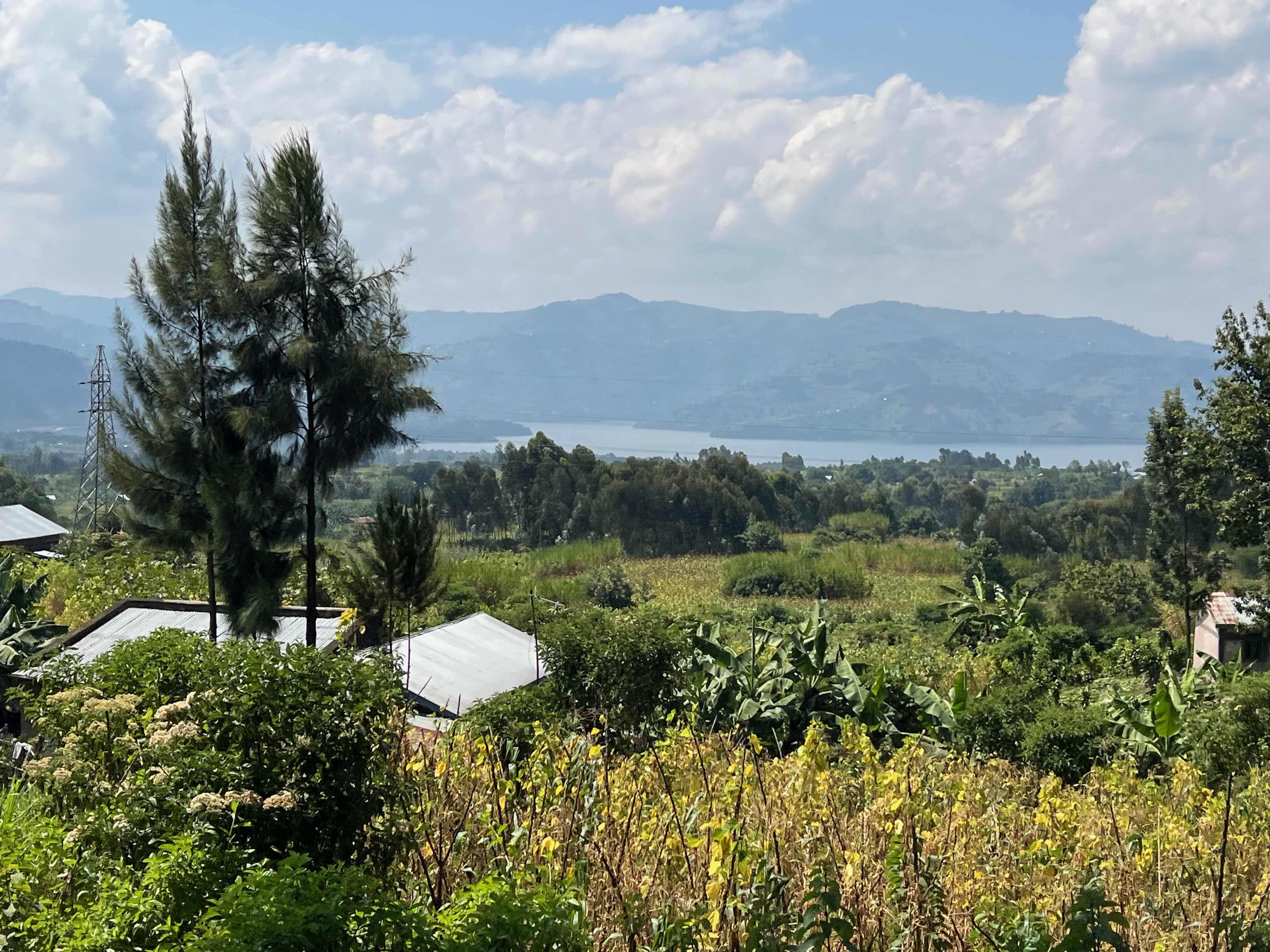

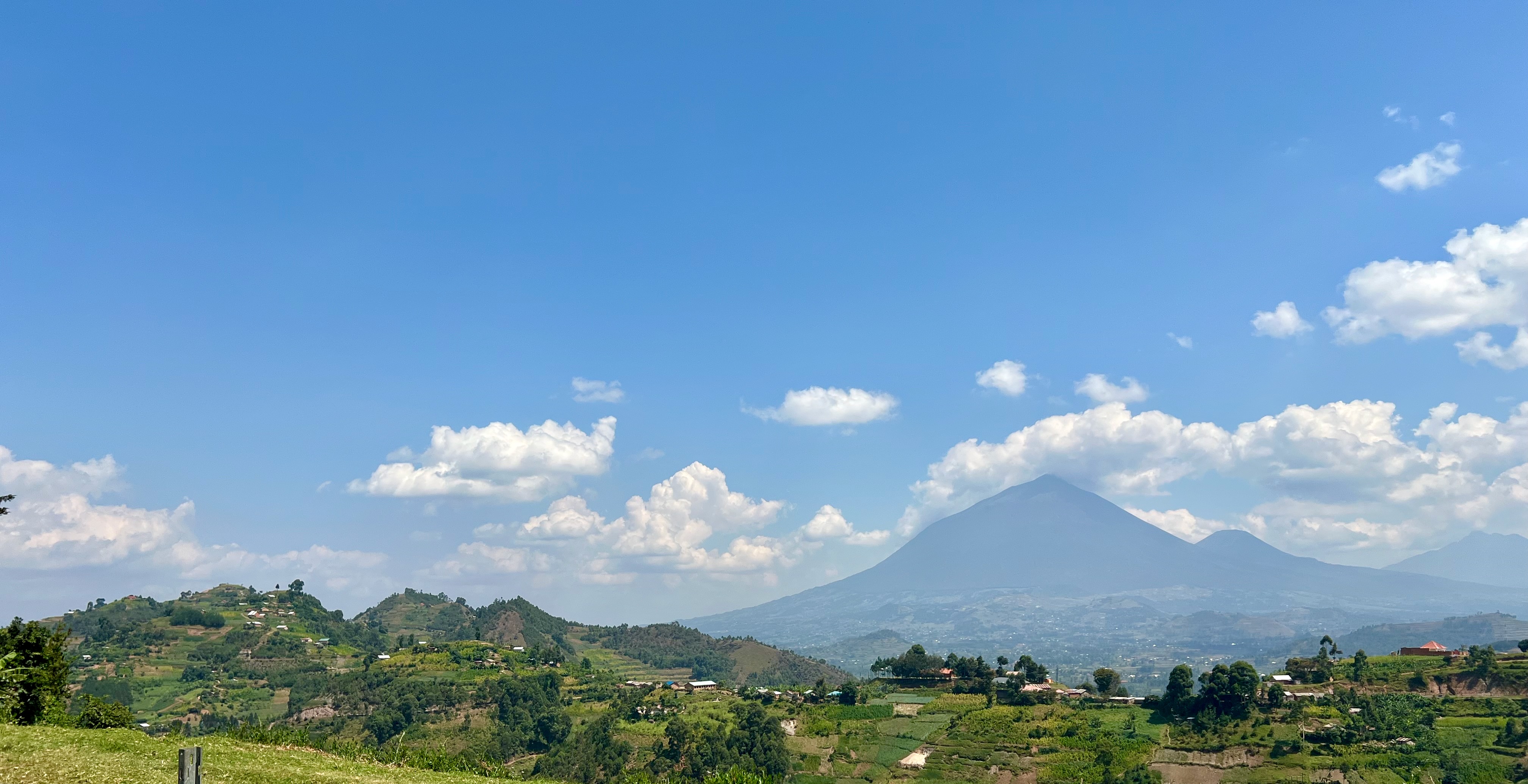



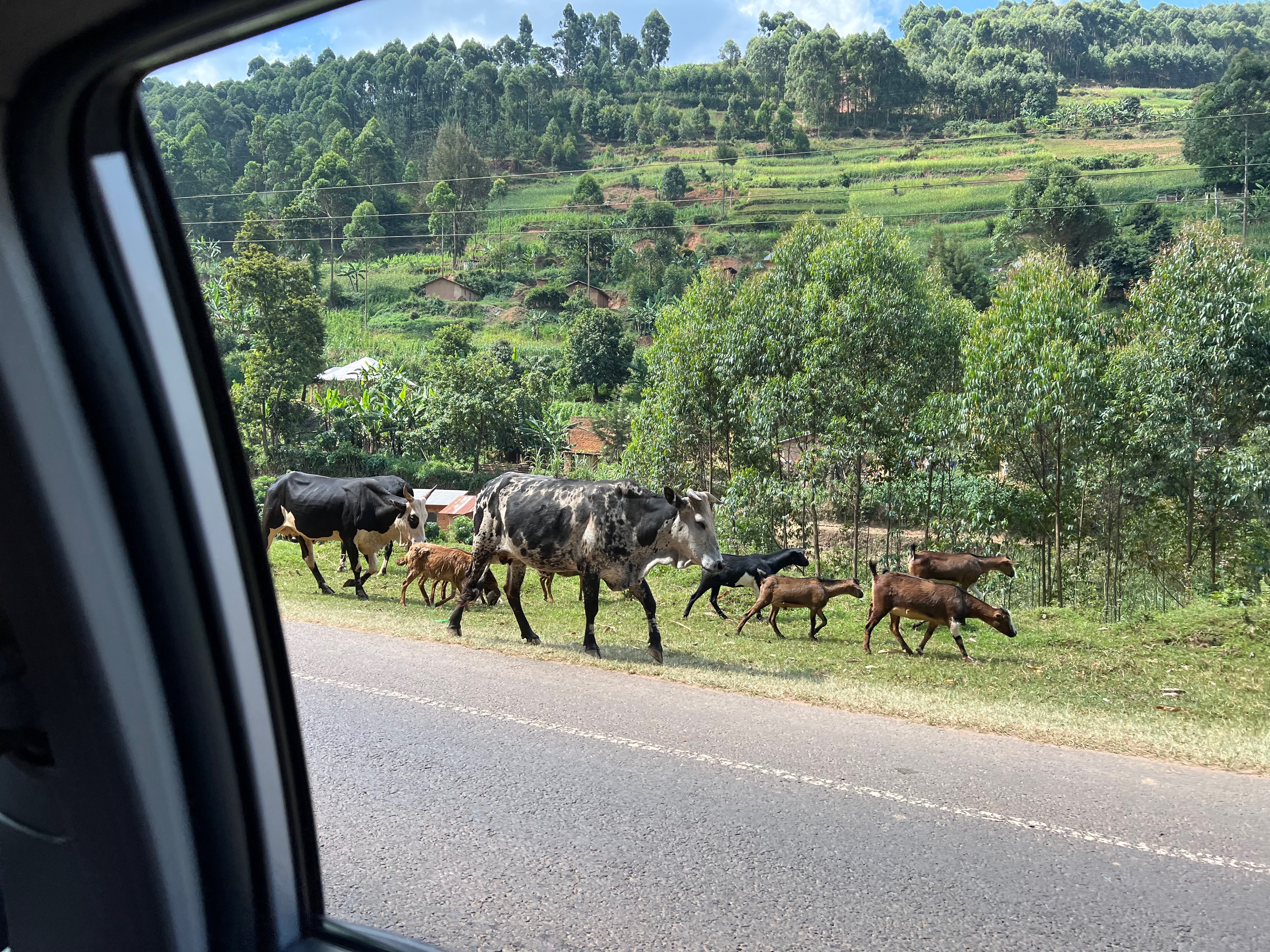
We instantly fell in love with Ugandan countryside. Lush, green, and beautiful, people farm every inch of open field. We went by terraced gardens up every mountainside. The lake came into view early on, which was deceiving because we still had 90 minutes of driving.
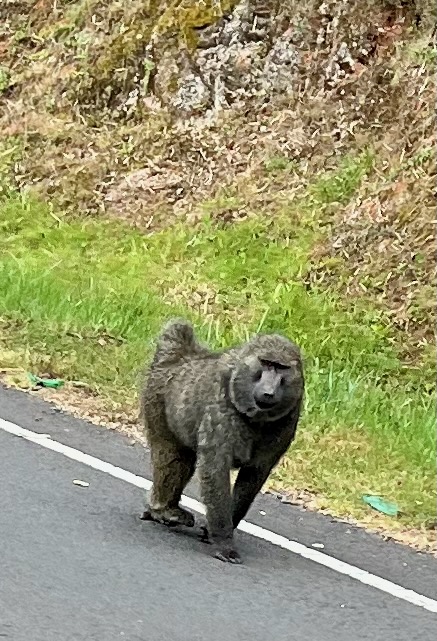
We passed through small towns and villages, through forests, and up and over mountains. At one point we passed a baboon just walking along the side of the road! A baboon!!! In the US, you have to visit a zoo to see a baboon. That’s why it felt like a movie!
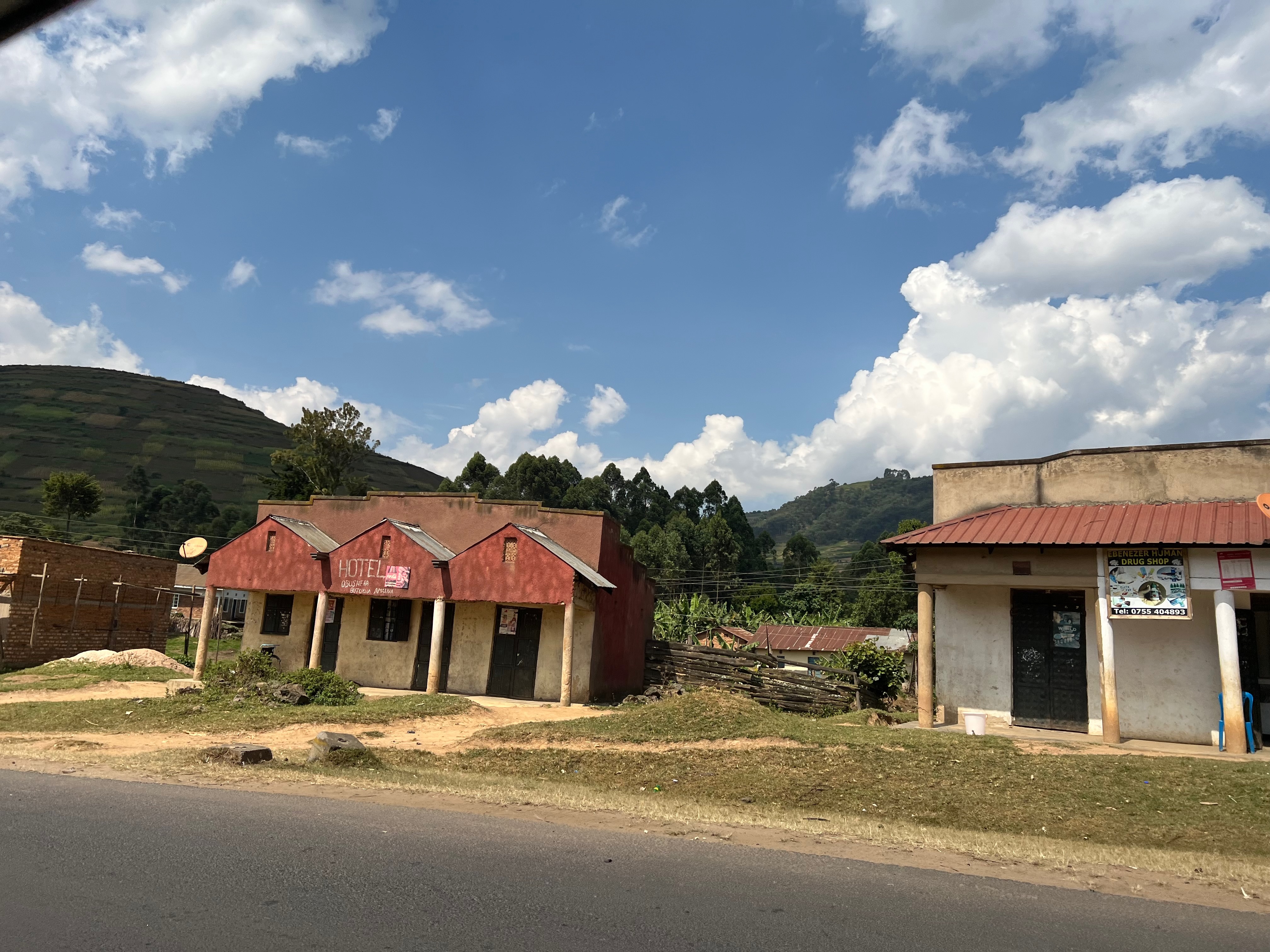


As we got closer to the lake, we began to see signs for various lake resorts.
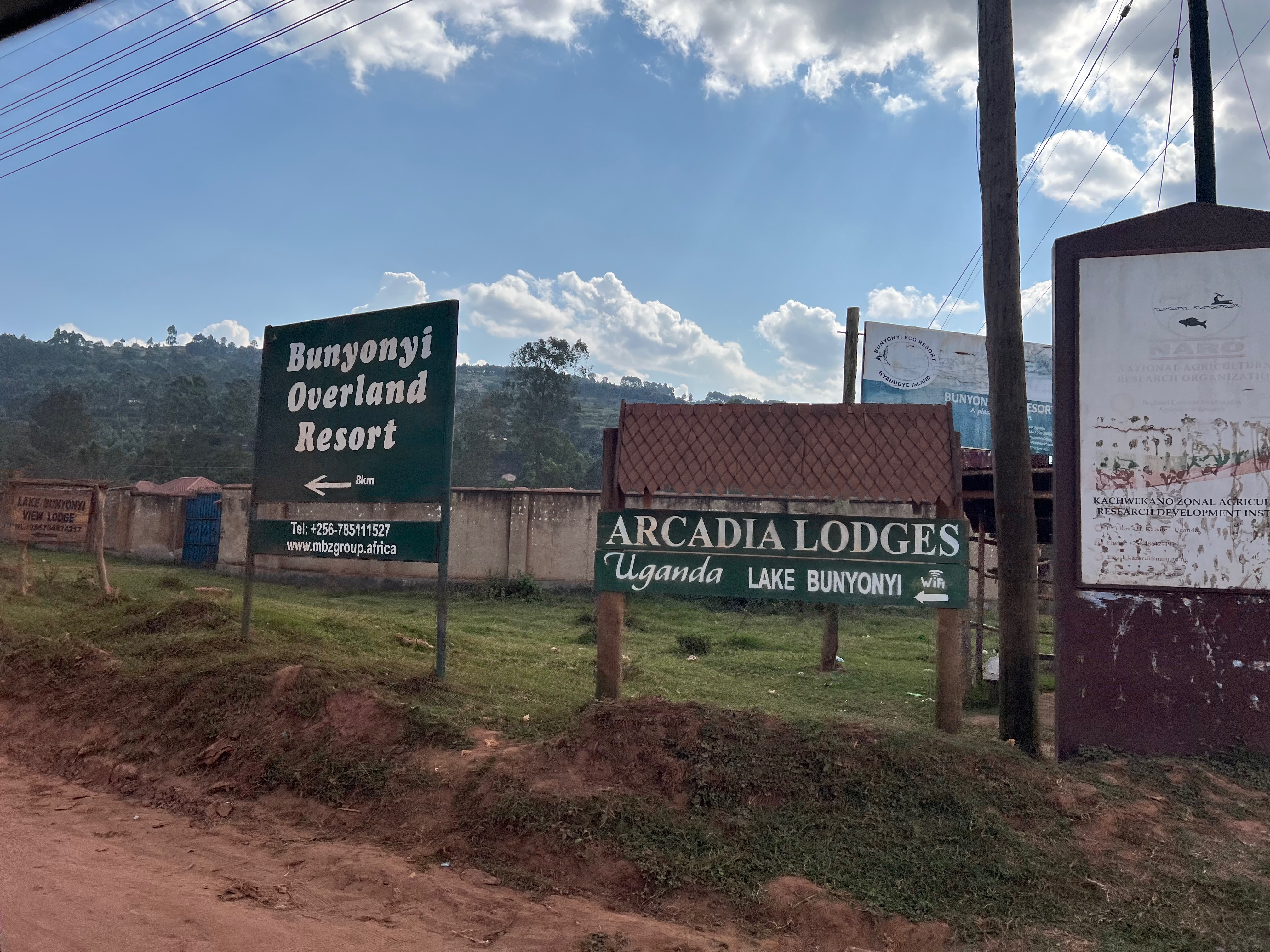
At that point, we turned off the paved highway and onto a rutted, dusty dirt road. It was 5 miles long, teeth-chattering and gut-wrenching. As he had all week, Jim did a great job of driving on a road that seemed at times impassable.
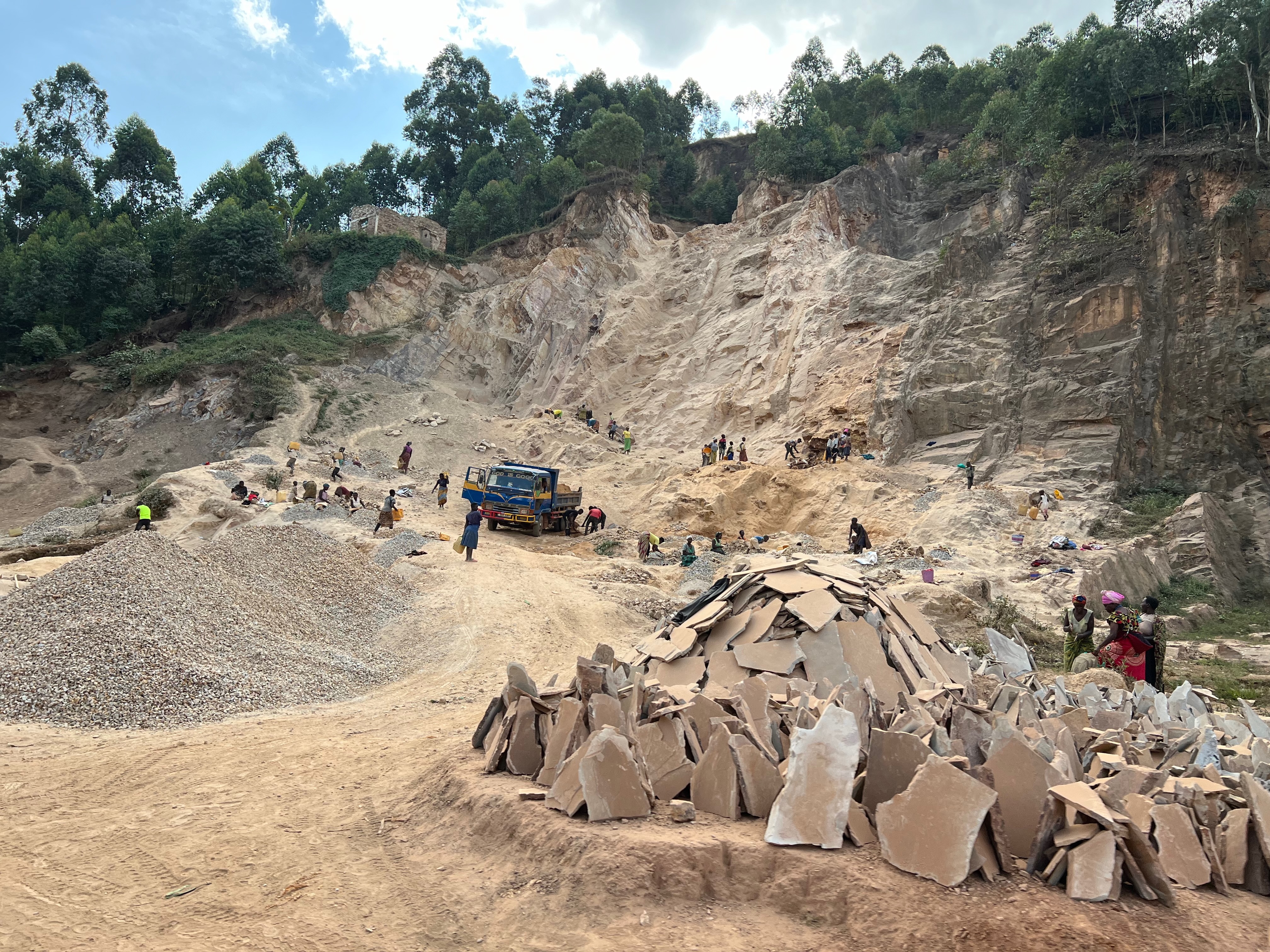
Along the way we saw a rocky pit where people were toiling away at the backbreaking work of harvesting stone. People sat in the dirt hitting the rocks with hammers. Others were carting away the stone and sorting based on size. This fueled my bourgeois guilt as I drove past these folks on my way to a luxury resort.
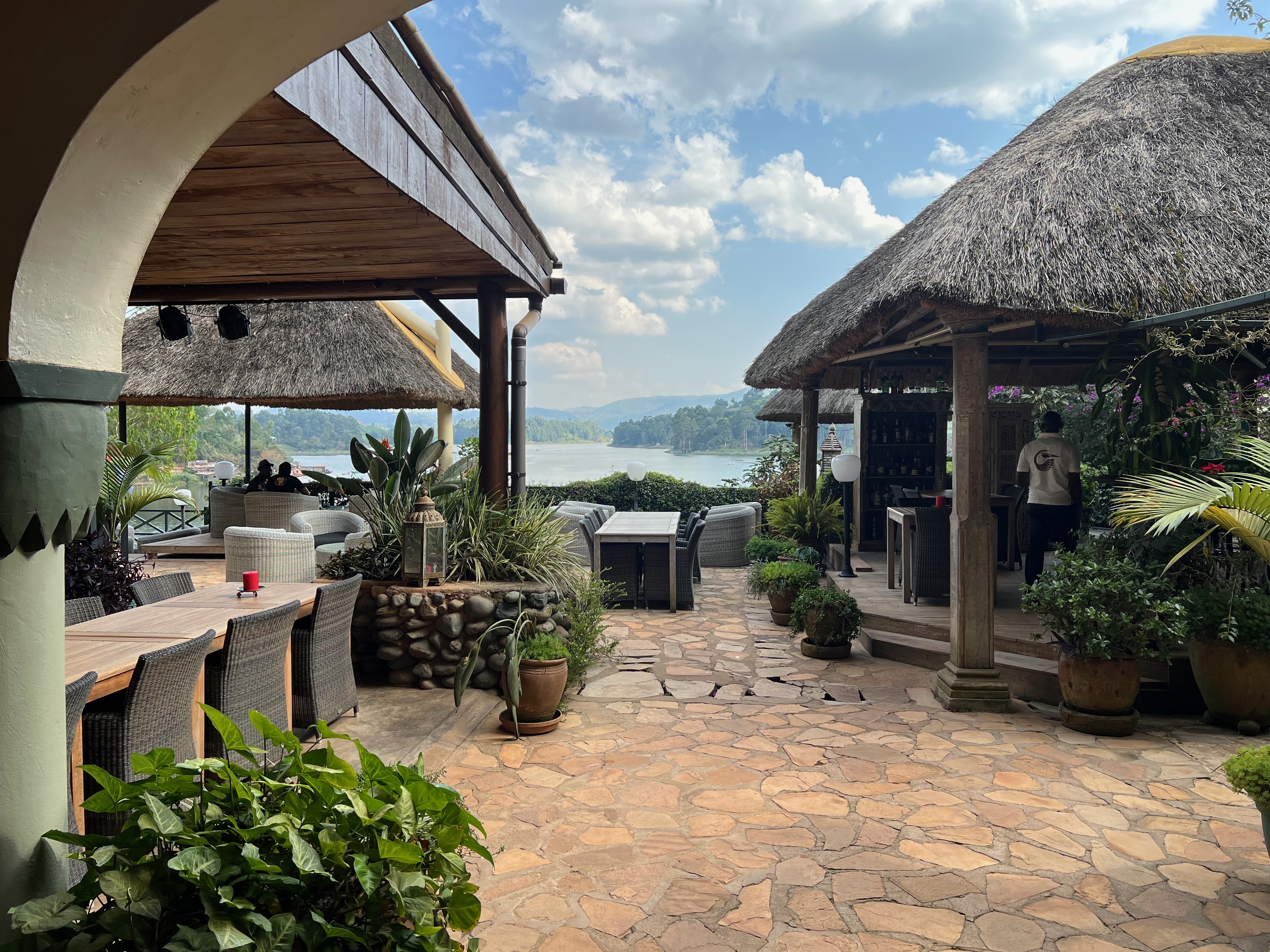


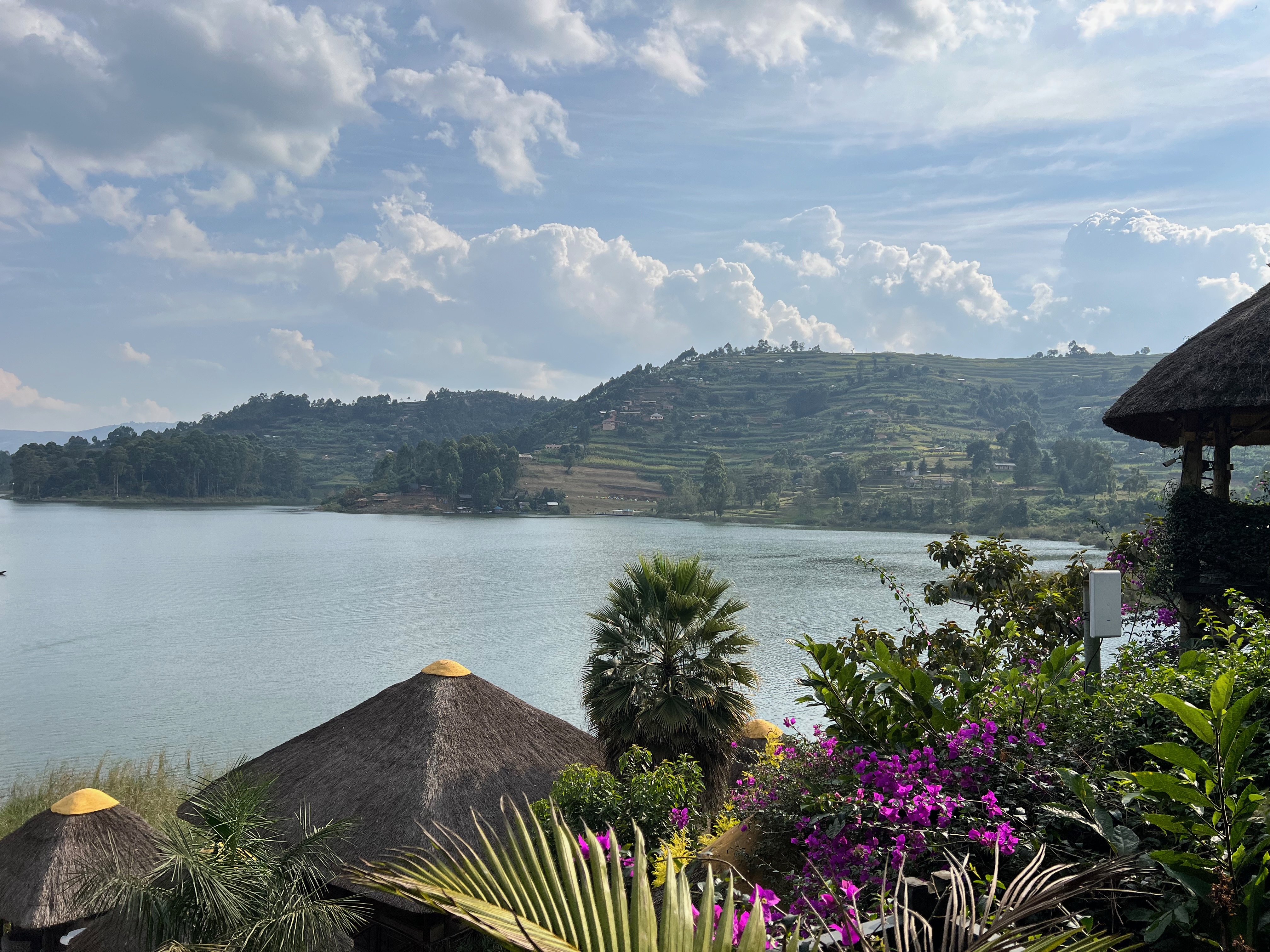
The Birdnest Resort was like a dream! It was built by Frank Kalimuzo, a Ugandan professor who rose up the ranks of Uganda’s national government. He built the place because he loved the lake and the surrounding area. Then came the coup of Idi Amin in the early 70’s. Like so many, Kalimuzo ran afoul of Amin’s murderous reign of terror. He was arrested, and never seen again.
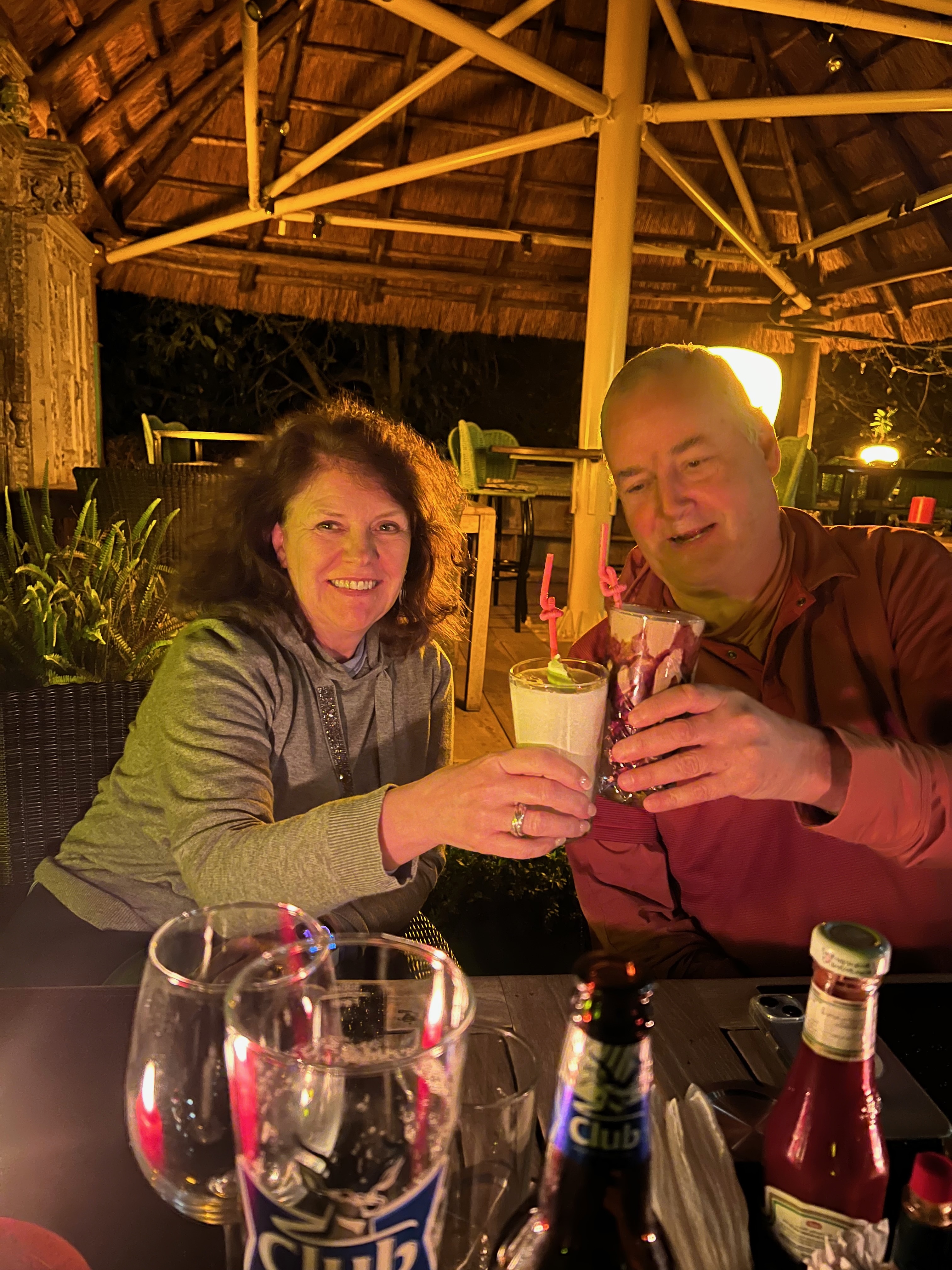
It is a gorgeous property overlooking the lake. The staff had us sit down for a beer and a snack before we got settled. Nobody deserved a beer more than Jim, and we’d all been breathing dust for the last half hour. They brought cold bottles of Nile Beer, and let us relax before a brief orientation.
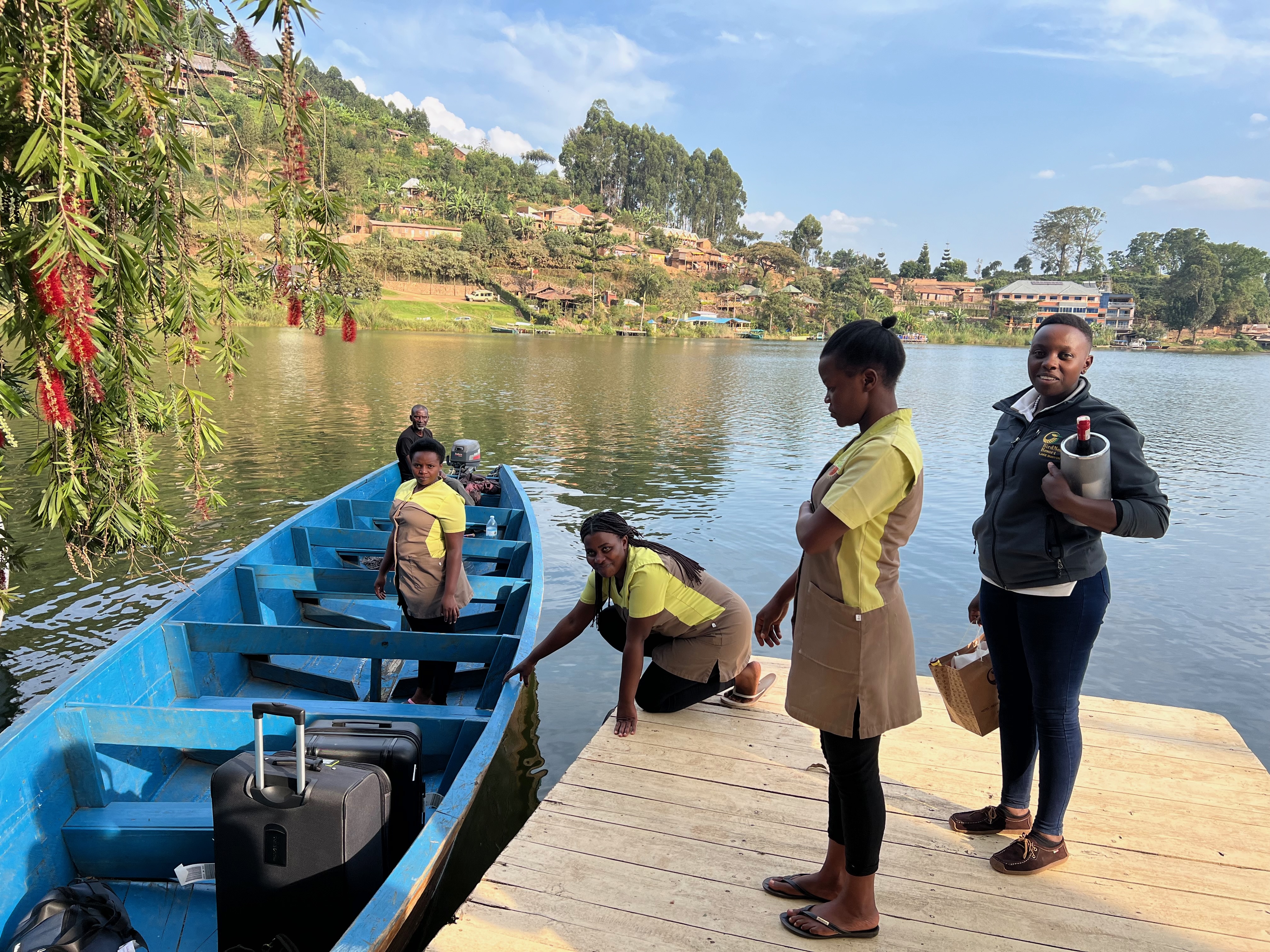
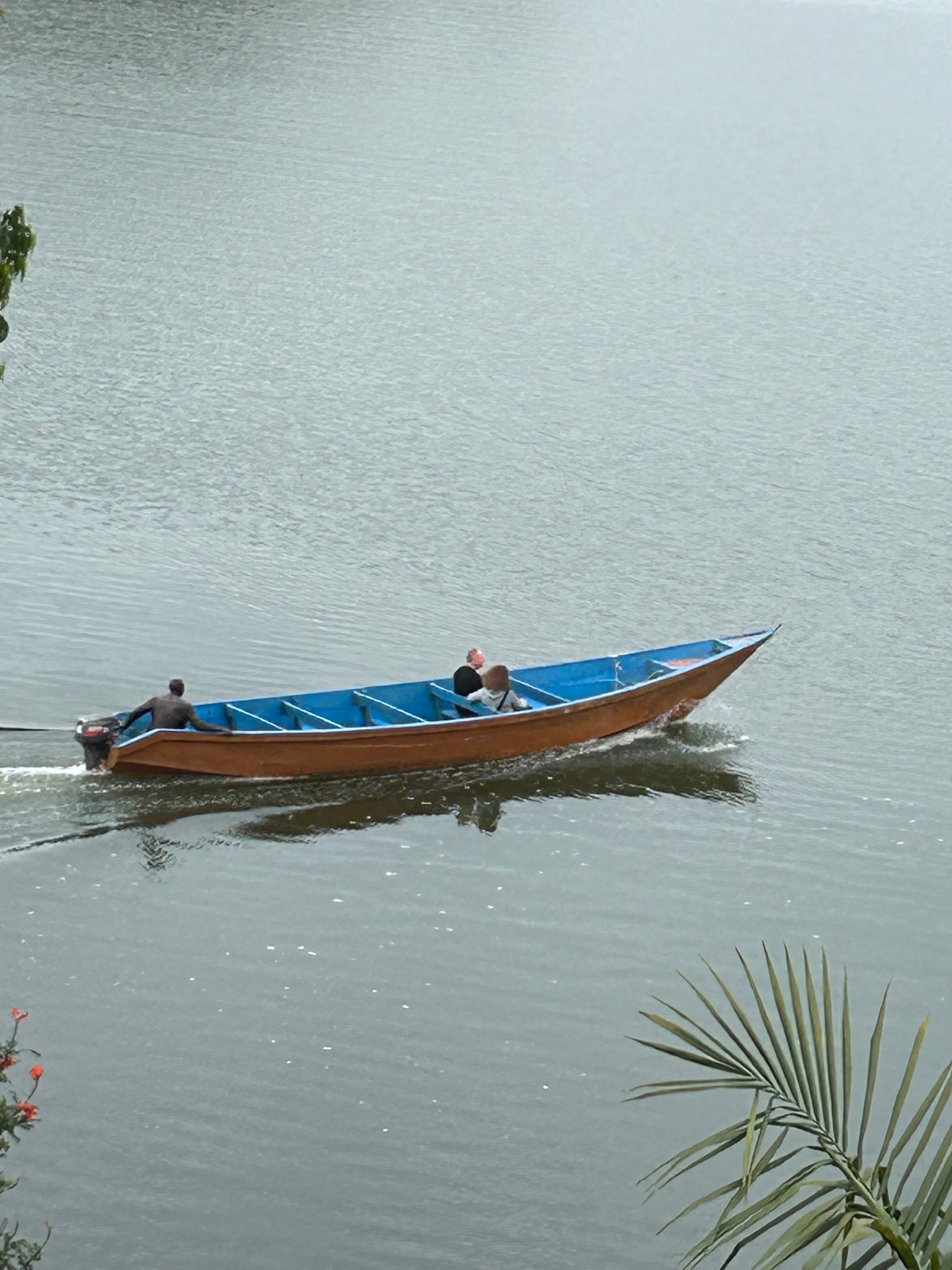
Our rooms were going to be a short boat ride across the lake. the place was charming and relaxed and the staff made us feel very comfortable. On the other side, there was a steep hill so they sent a brigade of staff to carry our bags.
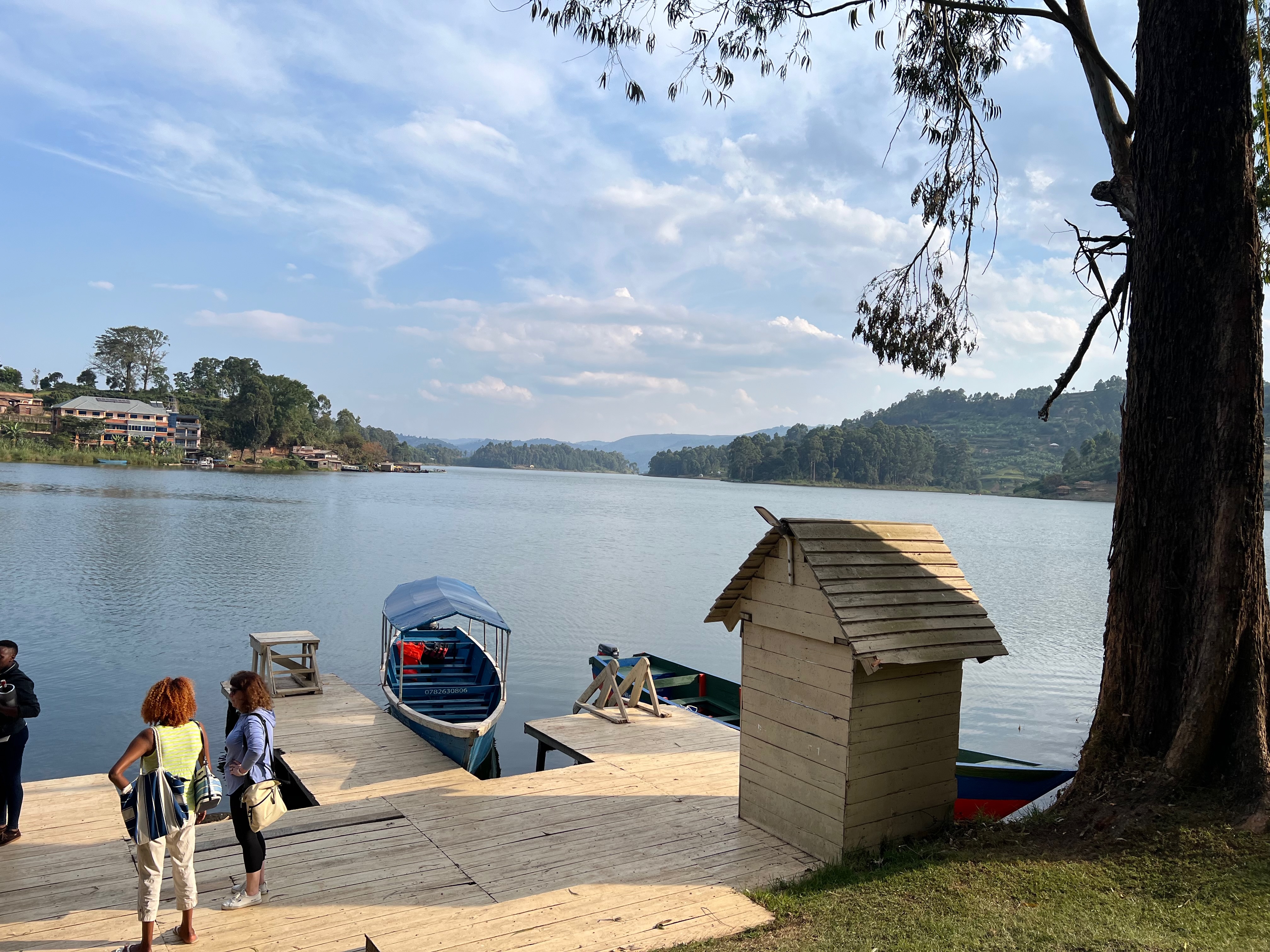


The units were cute cottages with thatched conical rooftops. There were gorgeous flowers everywhere and the weather was perfect.

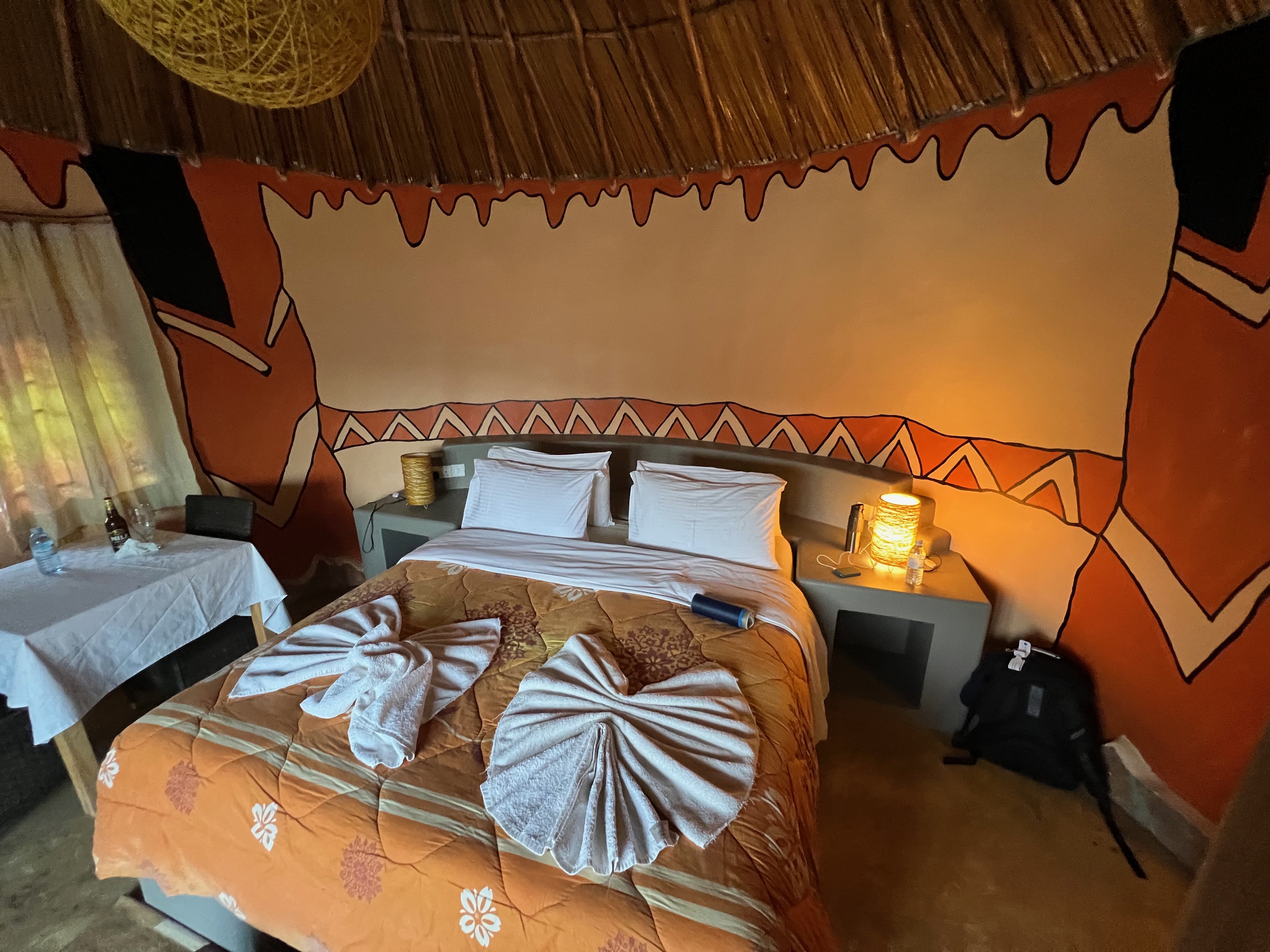


Everything was incredibly charming! Here we were, south of the equator, 7,000 miles from home, relaxing on a Ugandan lake!


One local delicacy that we enjoyed was native crayfish. We ate them fried, sautéed, and steamed, but always out of the shell. Apparently Uganda is not hip to “pinch, peel, eat”! If there was one downside here, it is that the food was all European-style continental cuisine. I was so eager for a few local dishes but they were not to be found.


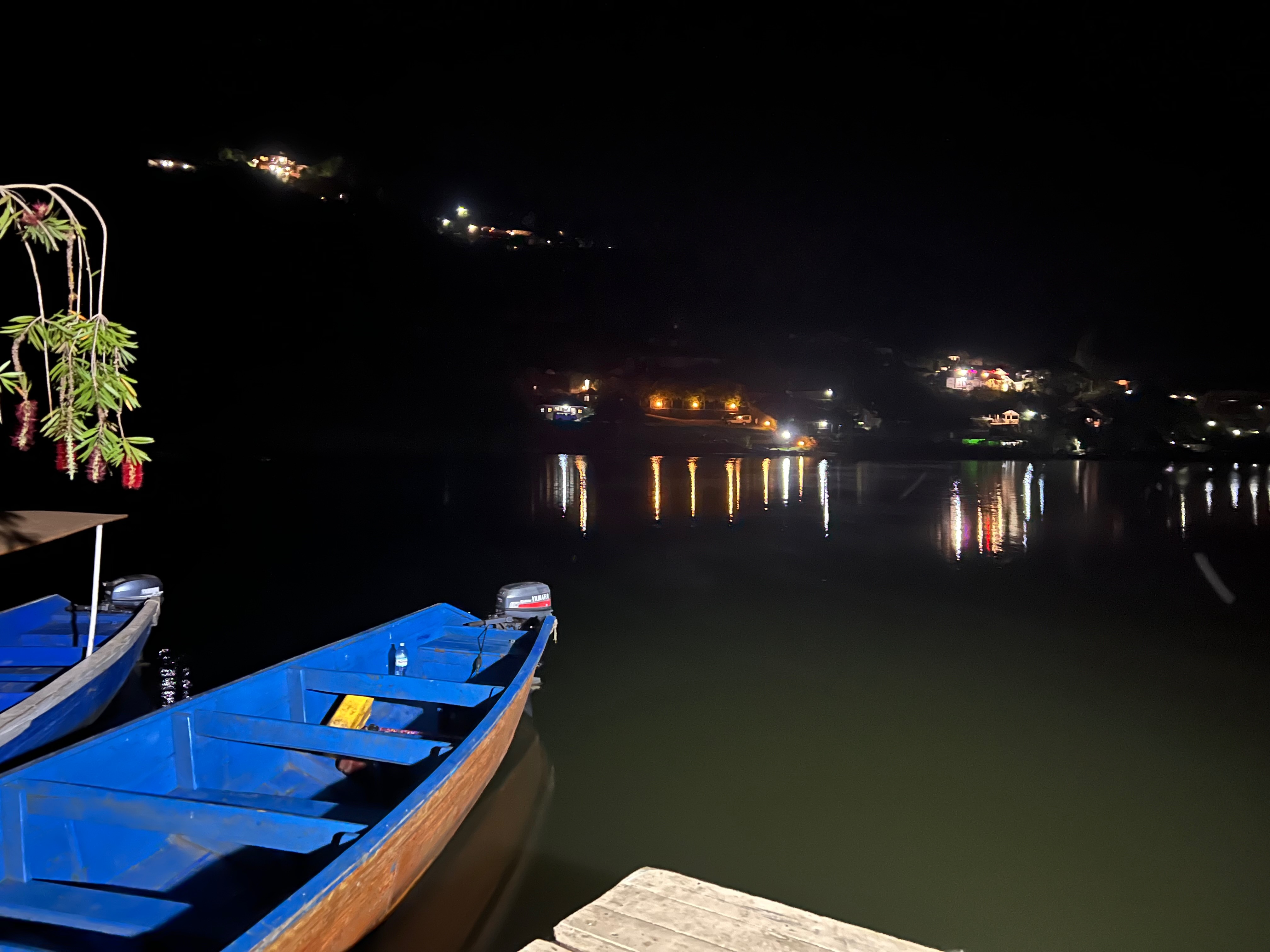
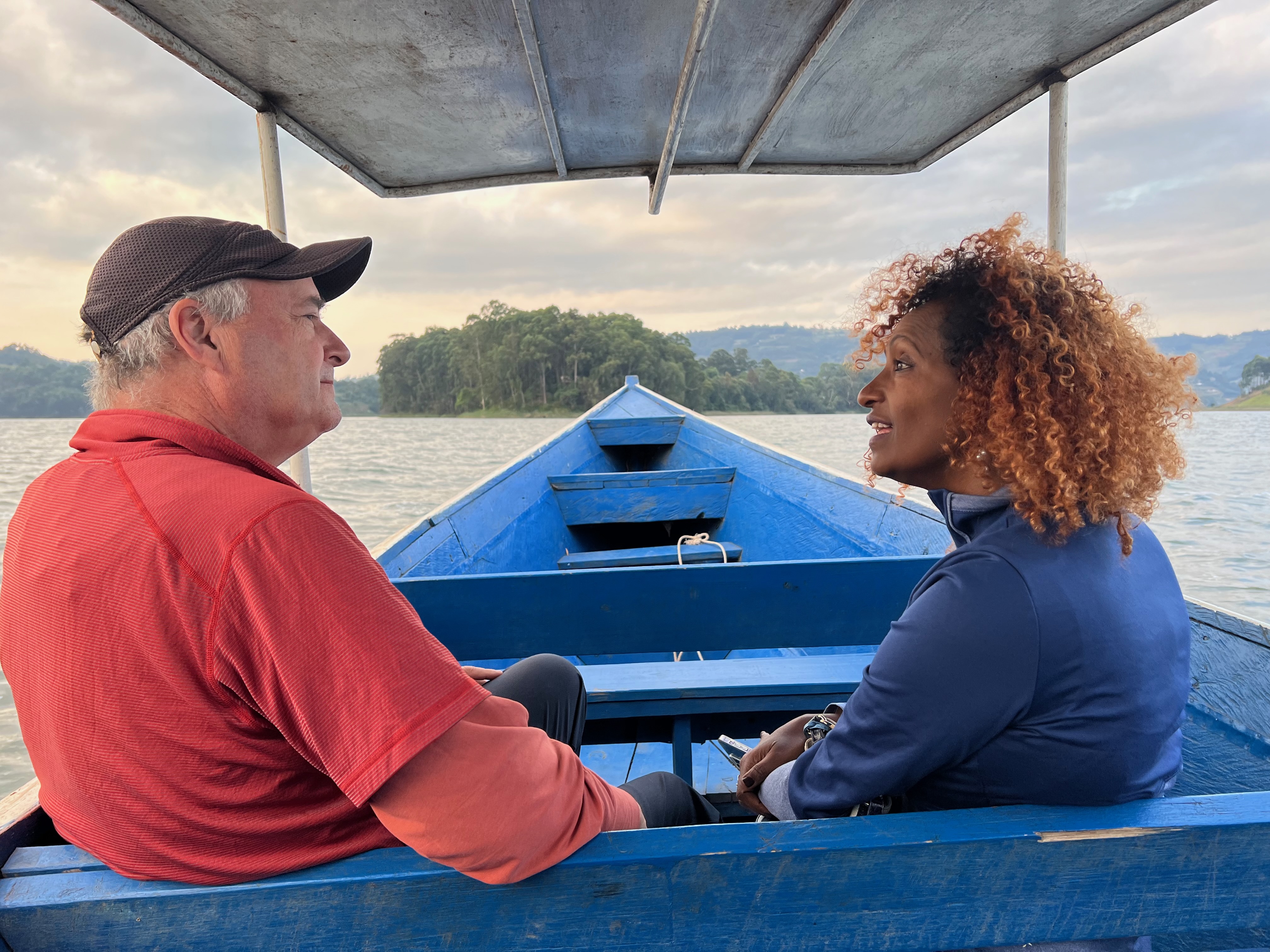
One evening, we were given a really interesting pre-dinner tour of the lake. This lake is a naturally formed lake from a 10,000 year old lava flow out of the Virunga mountains. It is dotted with eco-lodges, and a few wealthy properties, and a lot of history.


For centuries, residents traveled on the lake in dugout canoes. Locating school on an island in the middle of the lake made it accessible to a wide geographic area. Communities many hours away from each other by land, could meet in the middle…of the lake! This lead to Uganda requiring swimming lessons of all children because of the daily risk.
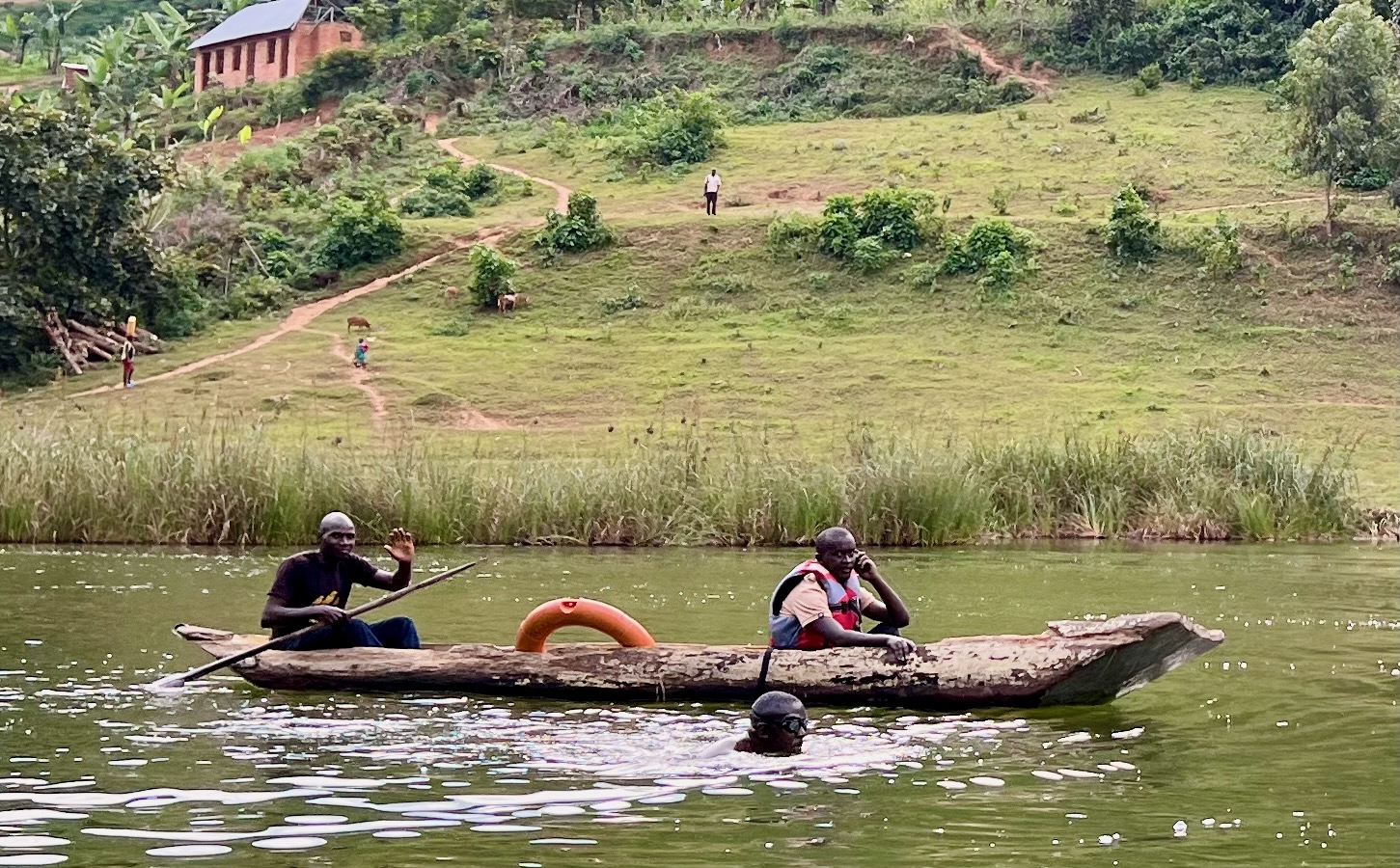


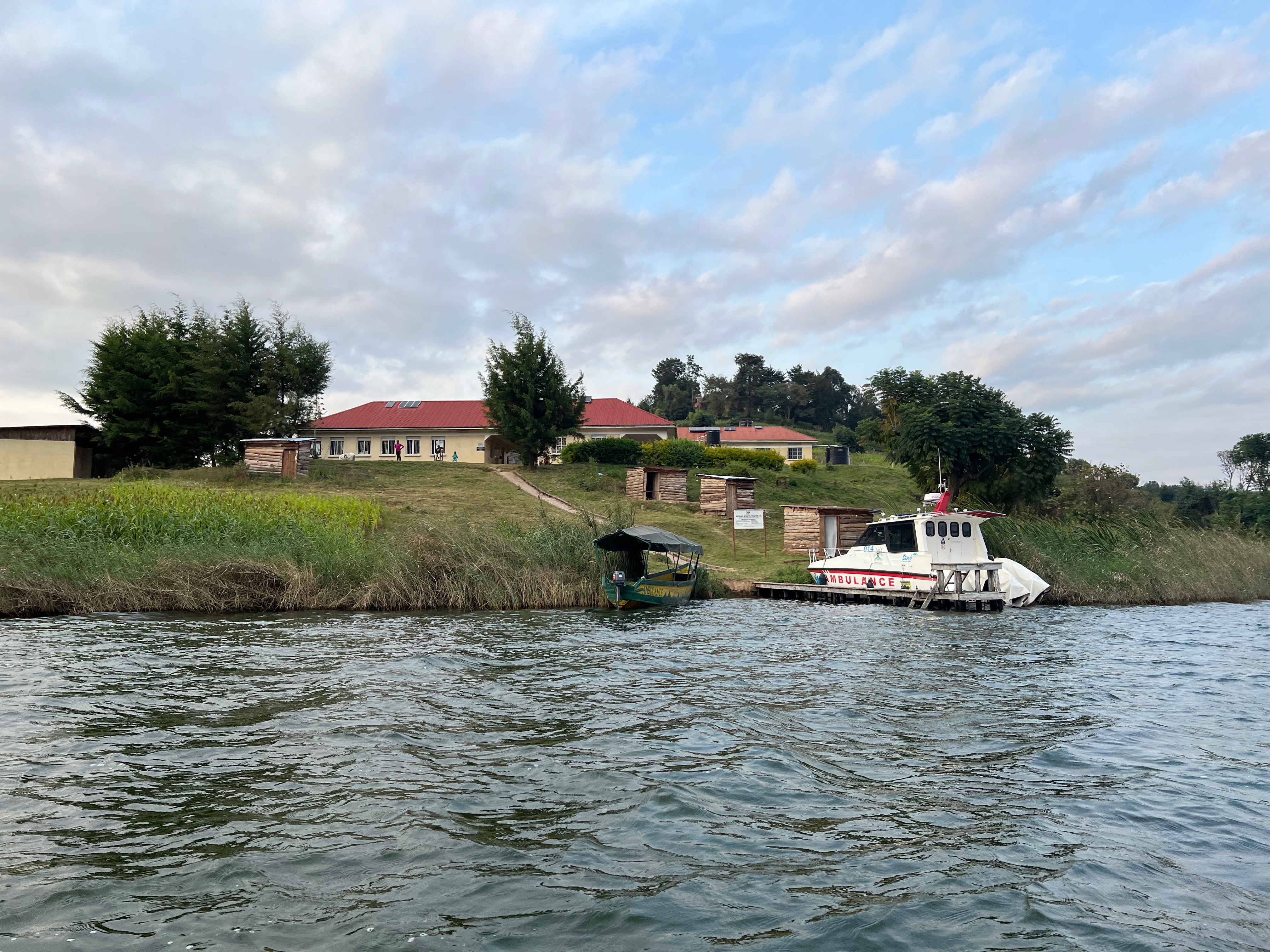

We went by a hospital which had an. ambulance boat. Again, this central location enlarged the hospital’s reach in every direction.
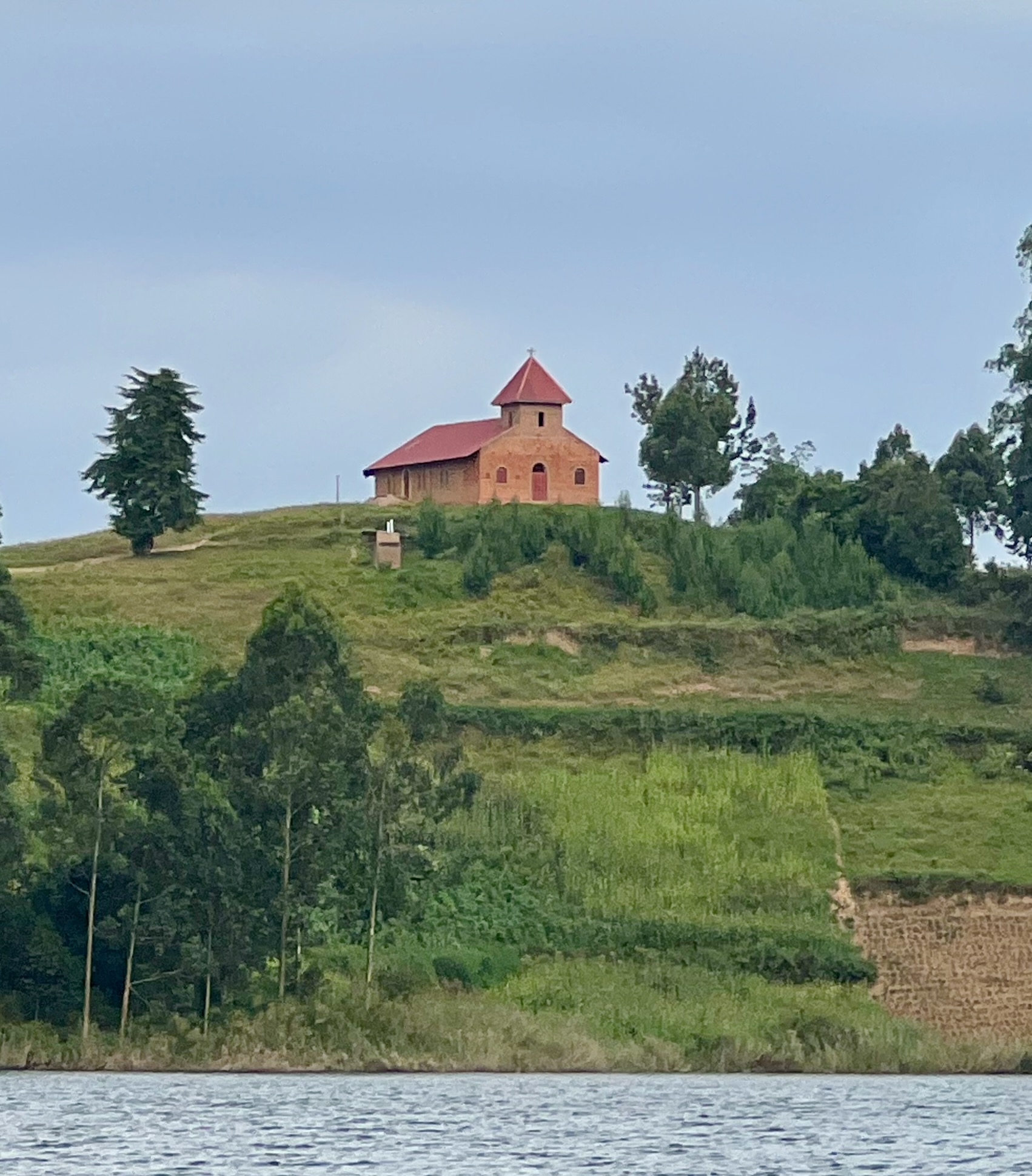
One island had a convent and church which, we learned, had been a leper colony as late as the 1930’s. It was founded by an idealistic English doctor. The colony used voluntary separation to ease the stigma of the disease and promote a happier life.
We saw Punishment Island, 1,000 square feet on which unmarried pregnant girls were exiled to die. There was no food source, and isolated enough to rule out a swim to safety. The only hope of rescue was a poor man who had no dowry. He could rescue one of these women. This practice continued into the early 20th century.
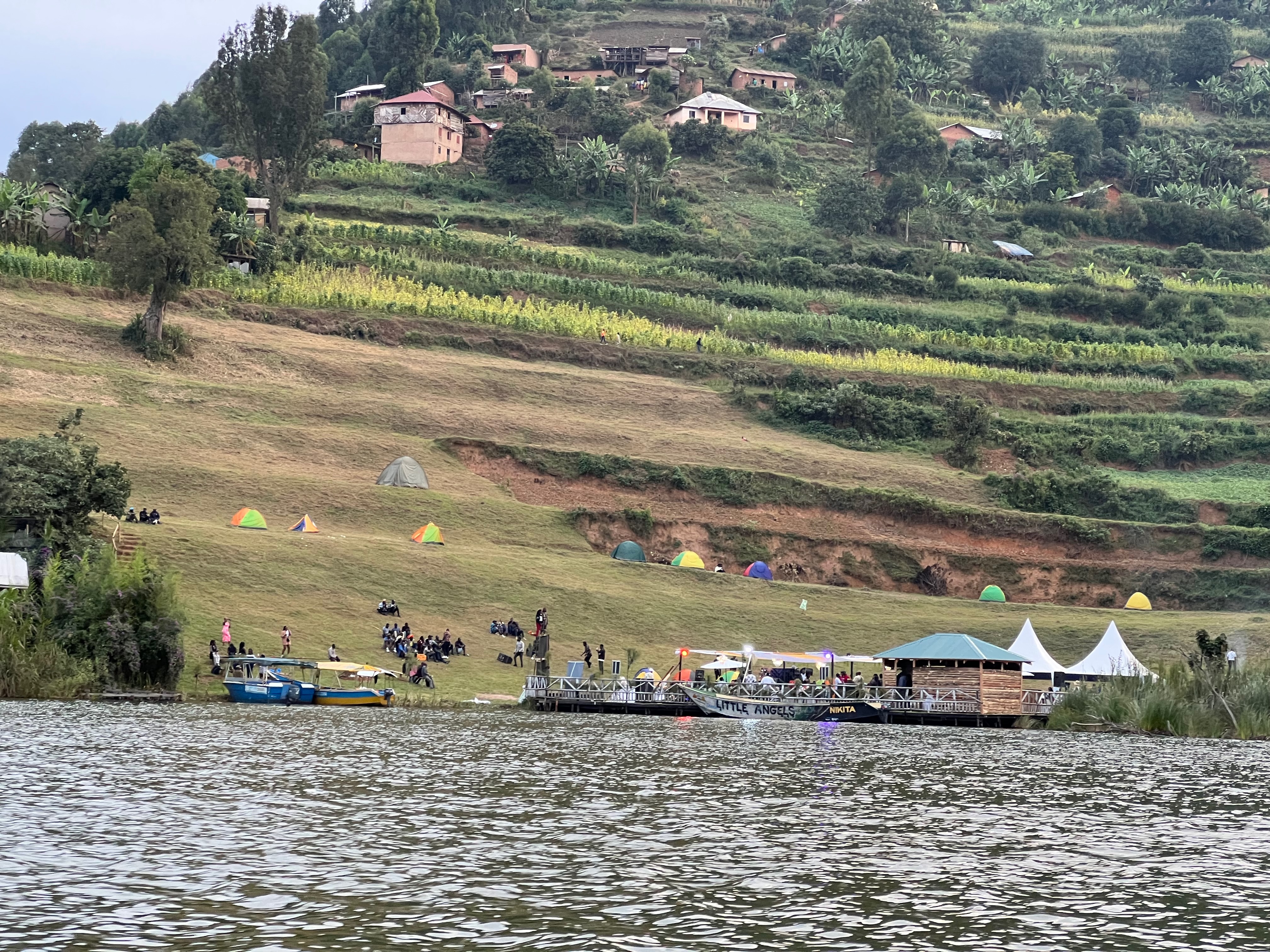

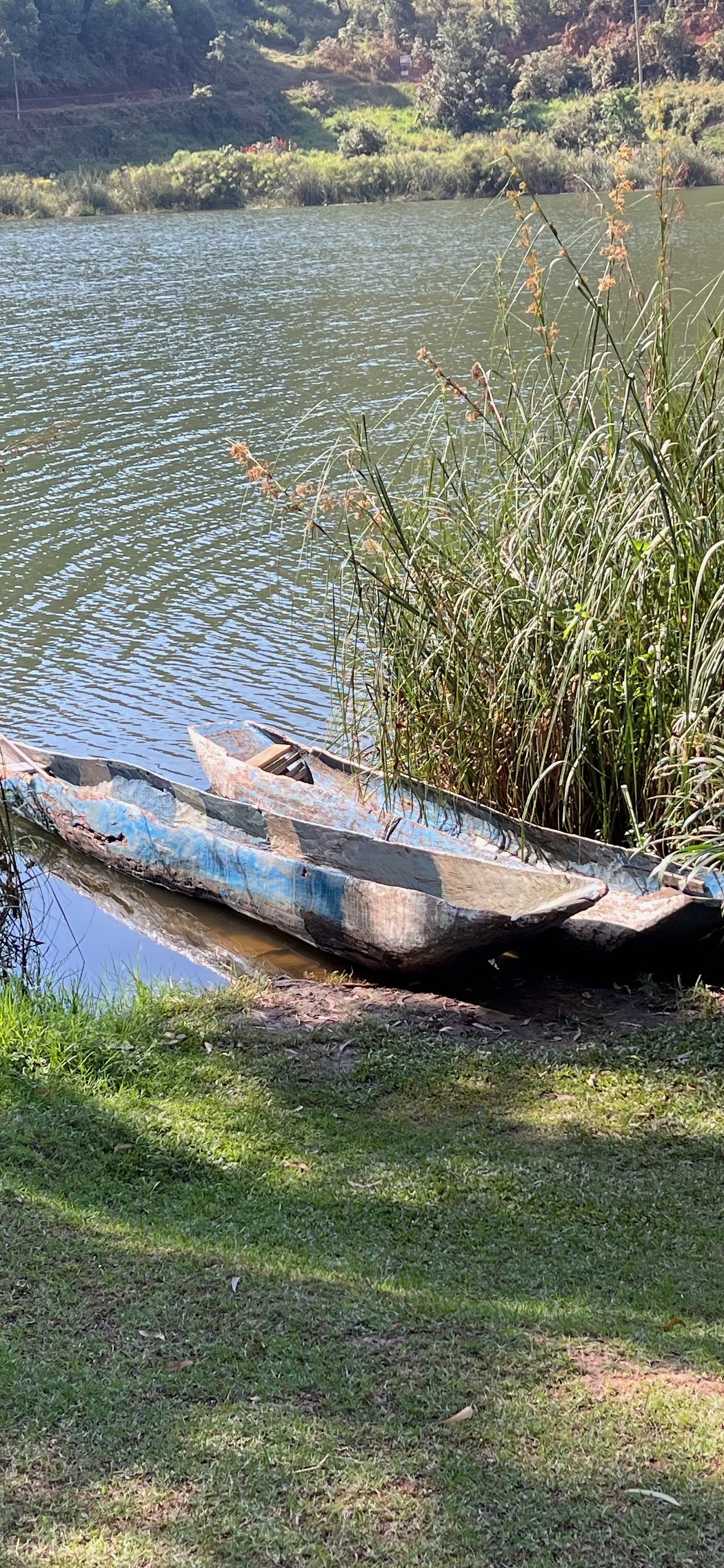

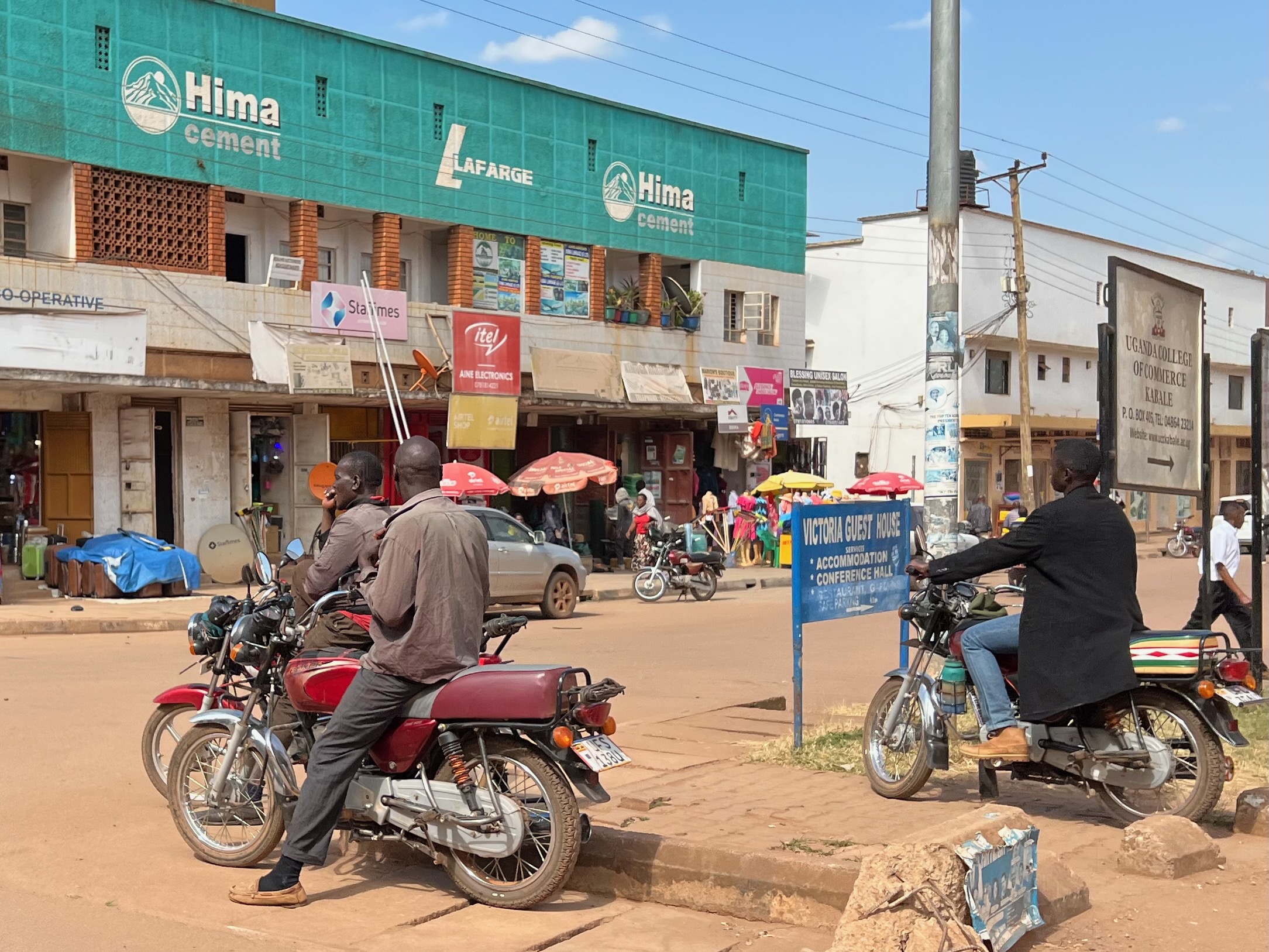
When it was time to leave, we took a different path from how we arrived. We drove through some small towns alive with commerce. Everywhere we looked, land was being farmed, goods being transported, and items sold on the side of the road.



Eventually, we came upon the familiar site of men pushing massive loads of produce–potatoes, bananas, melons–on a bicycle. This told us we were getting close to the border. Two hours away in Cyanika, people were exporting these items from Rwanda into Uganda. Here they were exporting what appeared to be the same stuff from Uganda into Rwanda!


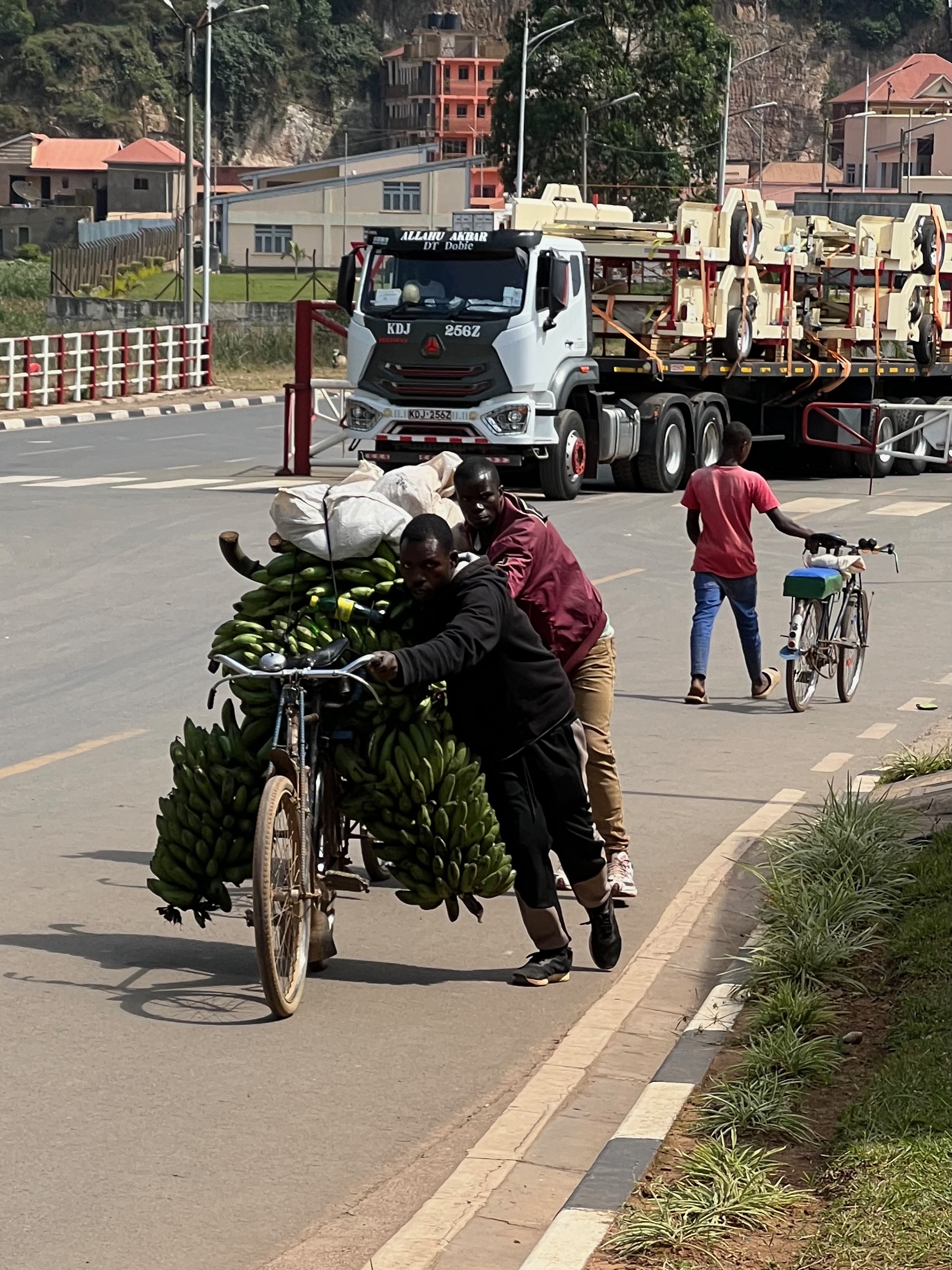
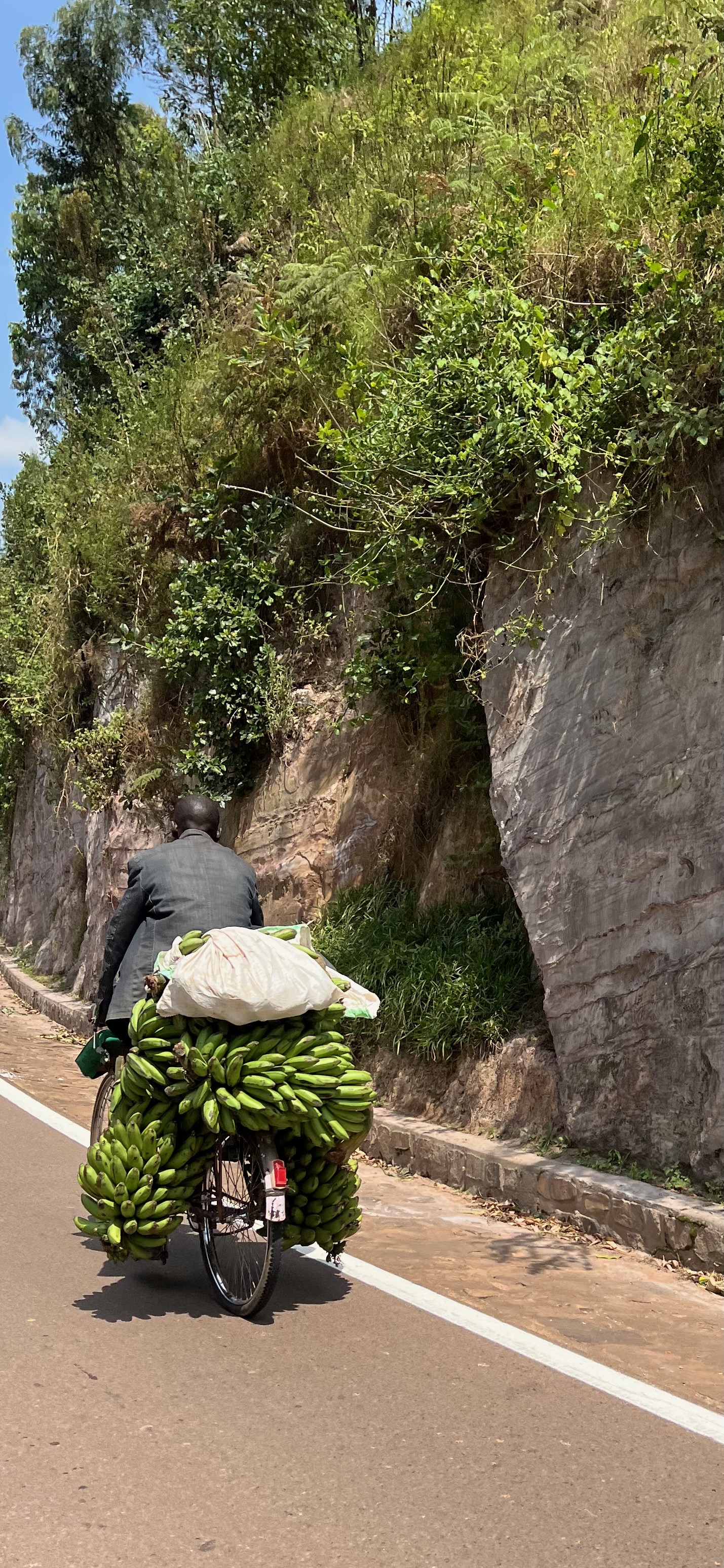
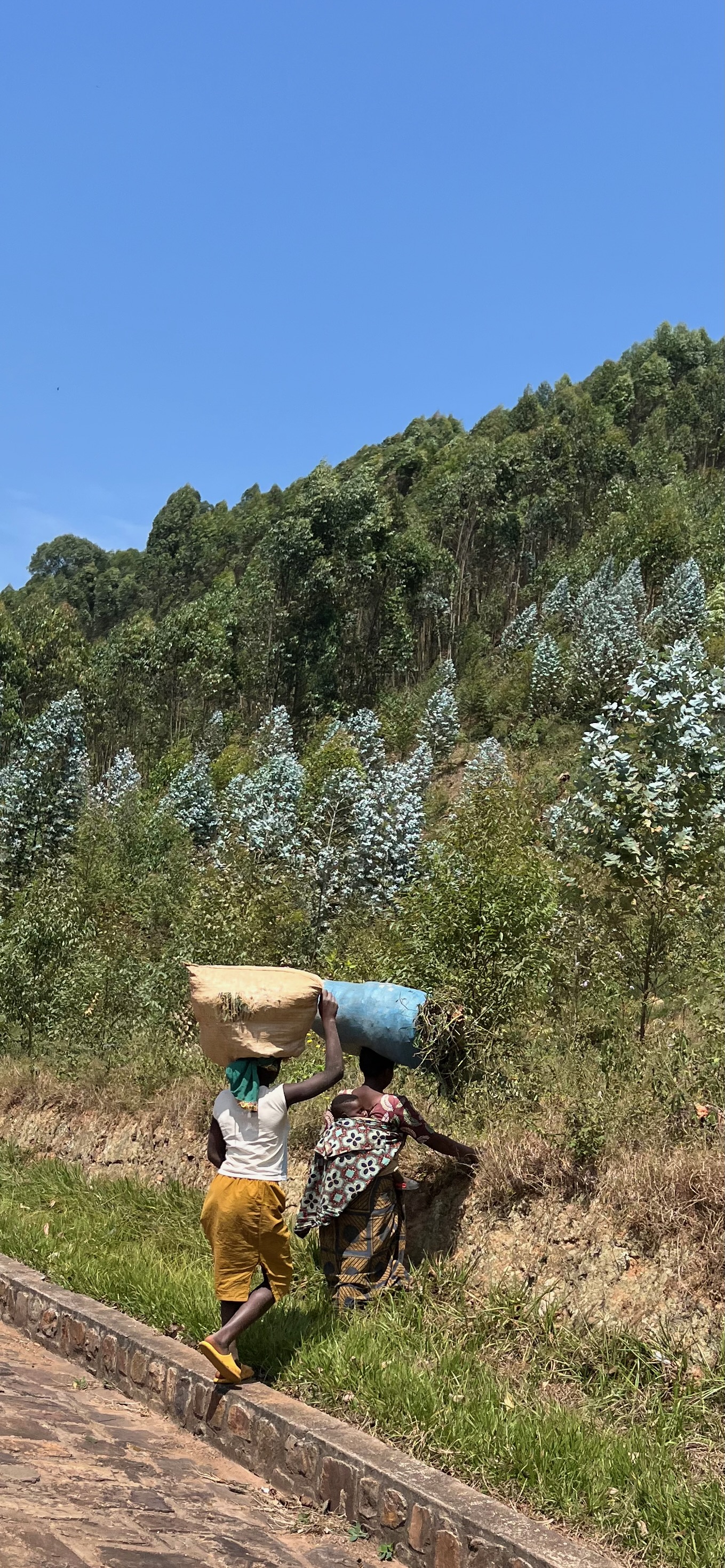
This border crossing was larger and more official. There were still the trucks intermingled with pedestrian commerce, but it did not have the small-town feel of Cyanika. In less than 30 minutes, we were inspected, processed out of Uganda, into Rwanda and on our way to Kigali. Once again, the whole experience seemed like a dream!

 ToneManblog
Loved reading this! Great pictures and interesting facts. More please!
LikeLike
Thank you!!
LikeLike